Vintage Computing Festival Berlin 2026, Report
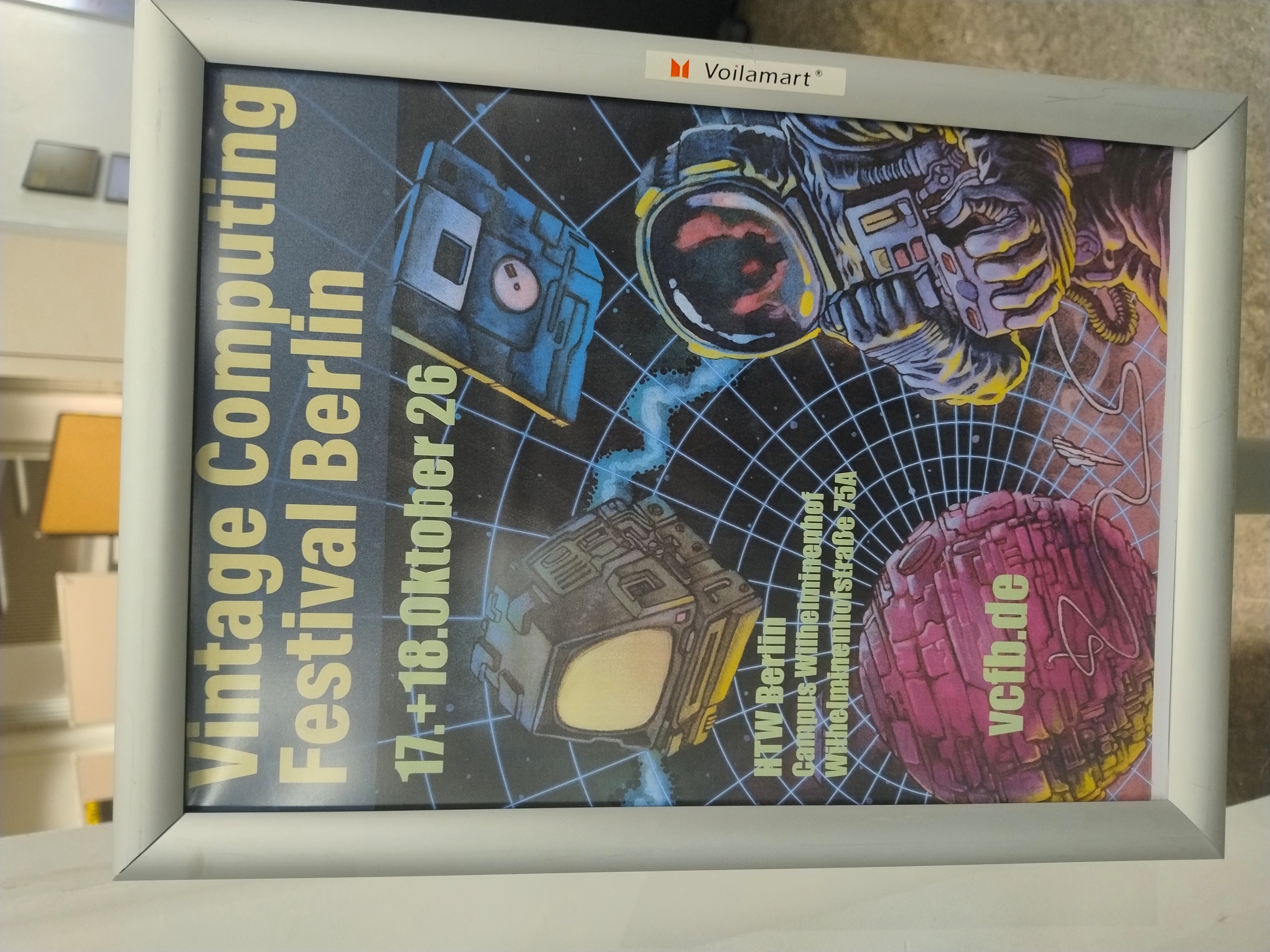
And so, here comes the culmination of another year: an event I always look forward to with great anticipation and prepare for as thoroughly as possible. On October 17 and 18, the Vintage Computing Festival Berlin (VCFB) took place at the HTW university campus in Berlin. As always, my exhibition represented a particular segment of the history of the emerging digital foundations of our modern world: handheld computers, mobile phones, and communicators. One could argue that this category doesn't quite qualify as what was traditionally called a computer. Nevertheless, all these devices played a significant, and arguably even a fundamental, role in shaping today's Internet landscape. But enough of these lengthy musings. I'm simply incredibly happy to have another opportunity to showcase and tell the story of handheld computers and mobile phones.
Preparation
For my previous exhibition, I had to get inventive to fit the most interesting part of my collection onto just a few tables. This involved using cardboard from a cat food box and some garden wire. Back then, one of the exhibitors suggested improving the overall setup by using perforated pegboards. And that's exactly what I did.
Incidentally, since late 2024, the scale of the situation has reached alarming proportions: not only have new devices joined my collection, but so have mock-ups. Because, well, why not? As a result, the shelves of my new display stand featured both the actual exhibits and a huge mock-up of a Motorola RAZR² V8, purely to attract attention.
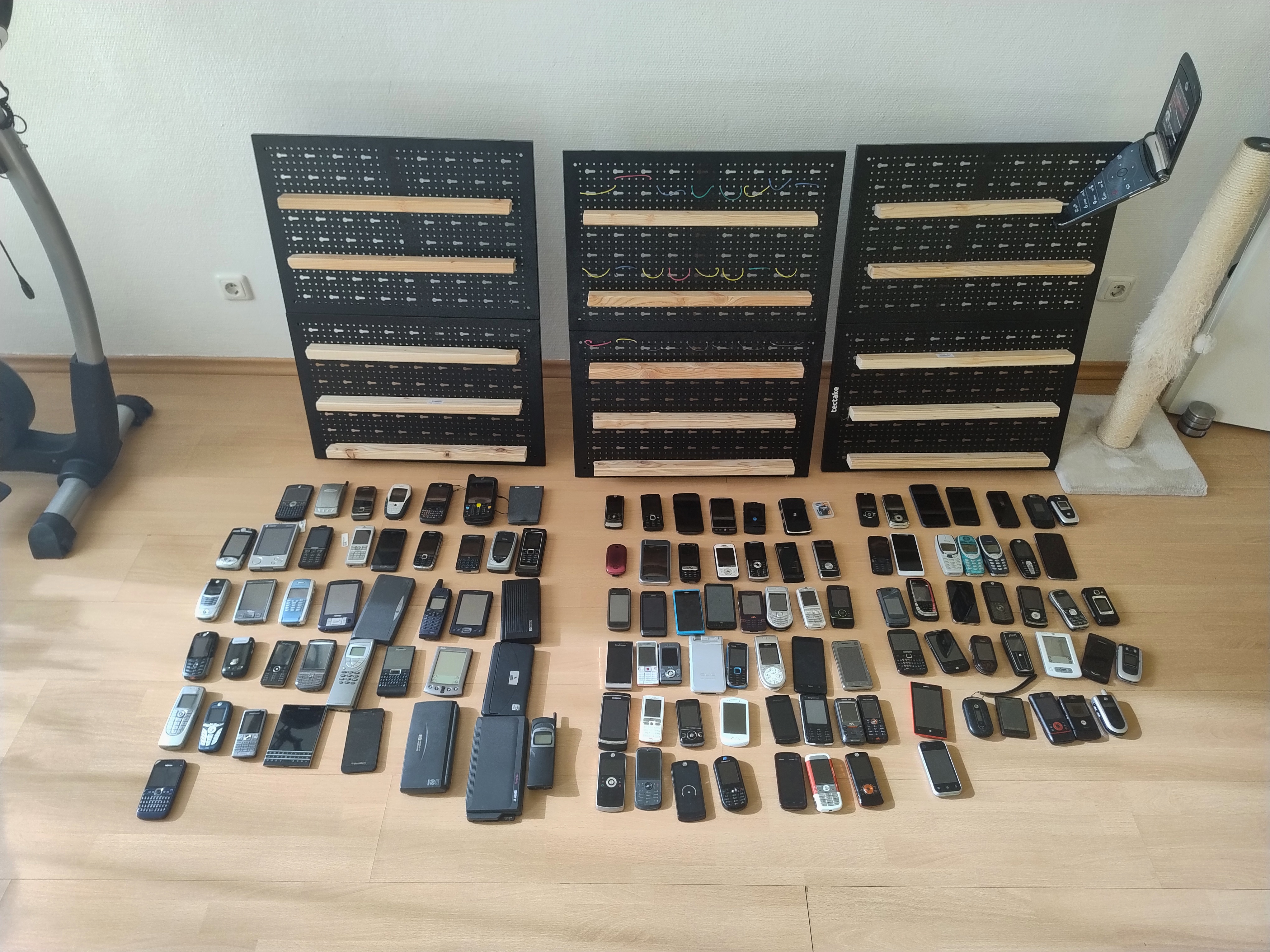
Roughly planning the arrangement of my treasures
There were 98 actual devices on display, 35 more than last time. Assembling the stands wasn't exactly easy, as I had to give considerable thought to the placement of each device, even deciding what to leave out and what to keep on the shelves. Incidentally, the shelves themselves are held in place by just two screws and can be removed very easily, which allowed me to reorganise the entire layout.
Just as at VCFB 2024, I divided the devices into three categories: Business, Multimedia, and Lifestyle. The first section featured palmtops, PDAs, and communicators, often equipped with built-in QWERTY keyboards. The second was dedicated to camera phones, gaming phones, and music phones — my favourite category, since I've always been and remain a music enthusiast, and having music in my pocket is critically important to me. Finally, the third section featured fashion-oriented and niche devices aimed at younger audiences, as well as whatever, for one reason or another, didn't fit into the first two categories.
I had originally planned to attach the phones and computers to the display boards using rubber bands and toothpicks. Fortunately, I was quickly talked out of that idea and persuaded to use transparent nylon fishing line instead of colourful rubber bands that would eventually degrade into primordial dinosaur soup. The result was much neater and more reliable.
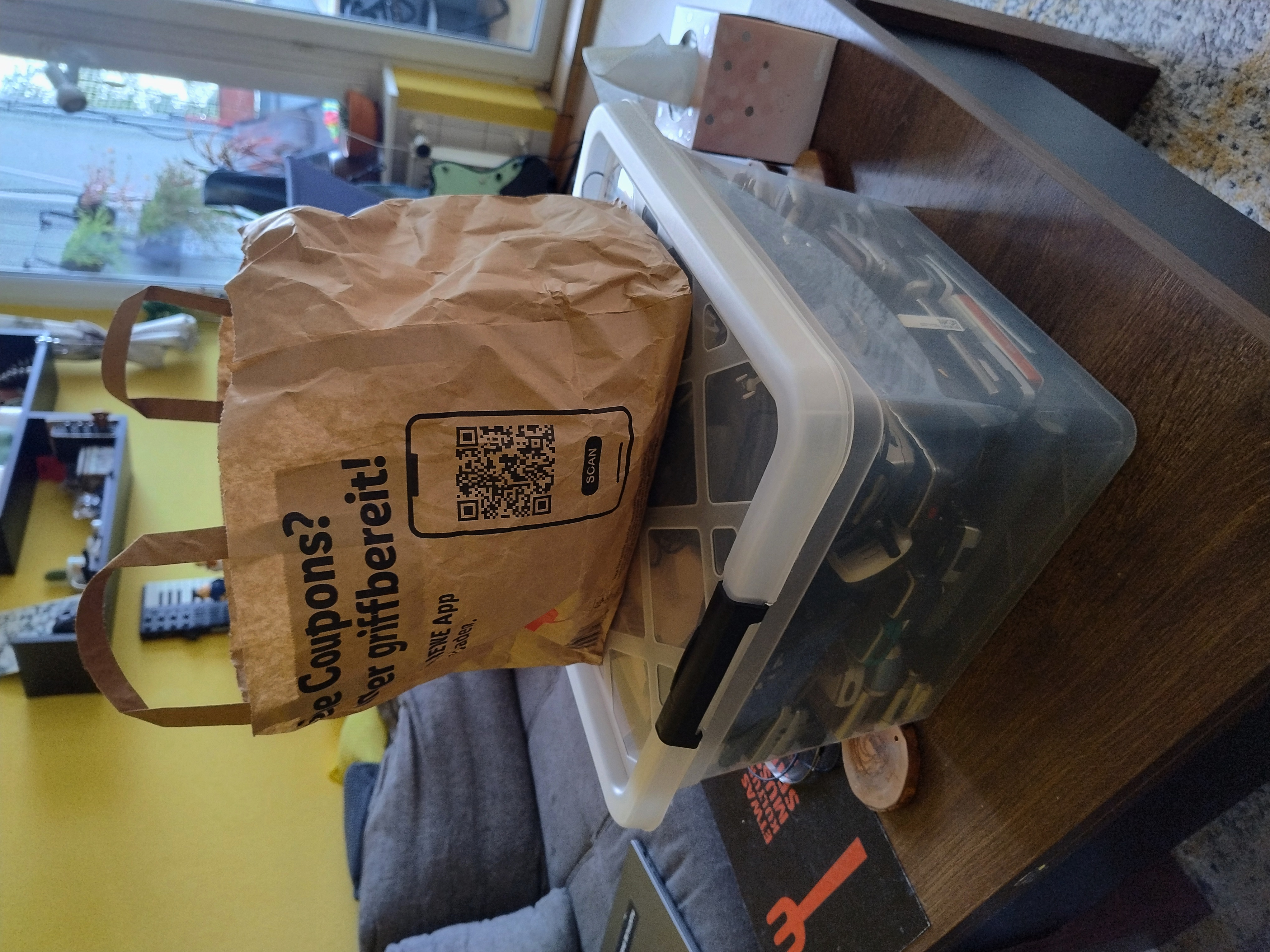
However, assembling the display stands alone wasn't enough. Every mobile phone and handheld computer collector has, alongside the beautiful and presentable part of their collection, an absolutely hideous side: batteries and the need to charge them. That's why my cargo also included a box labelled "Nasty Box", containing that very pile of chargers, cradles, cables, and batteries. I also purchased a universal charging station with 30 USB ports. It was precisely this device that allowed me to fully charge the entire collection over the course of two weeks, except, of course, for special cases requiring an original charging connector or devices that simply couldn't be charged via USB cable.
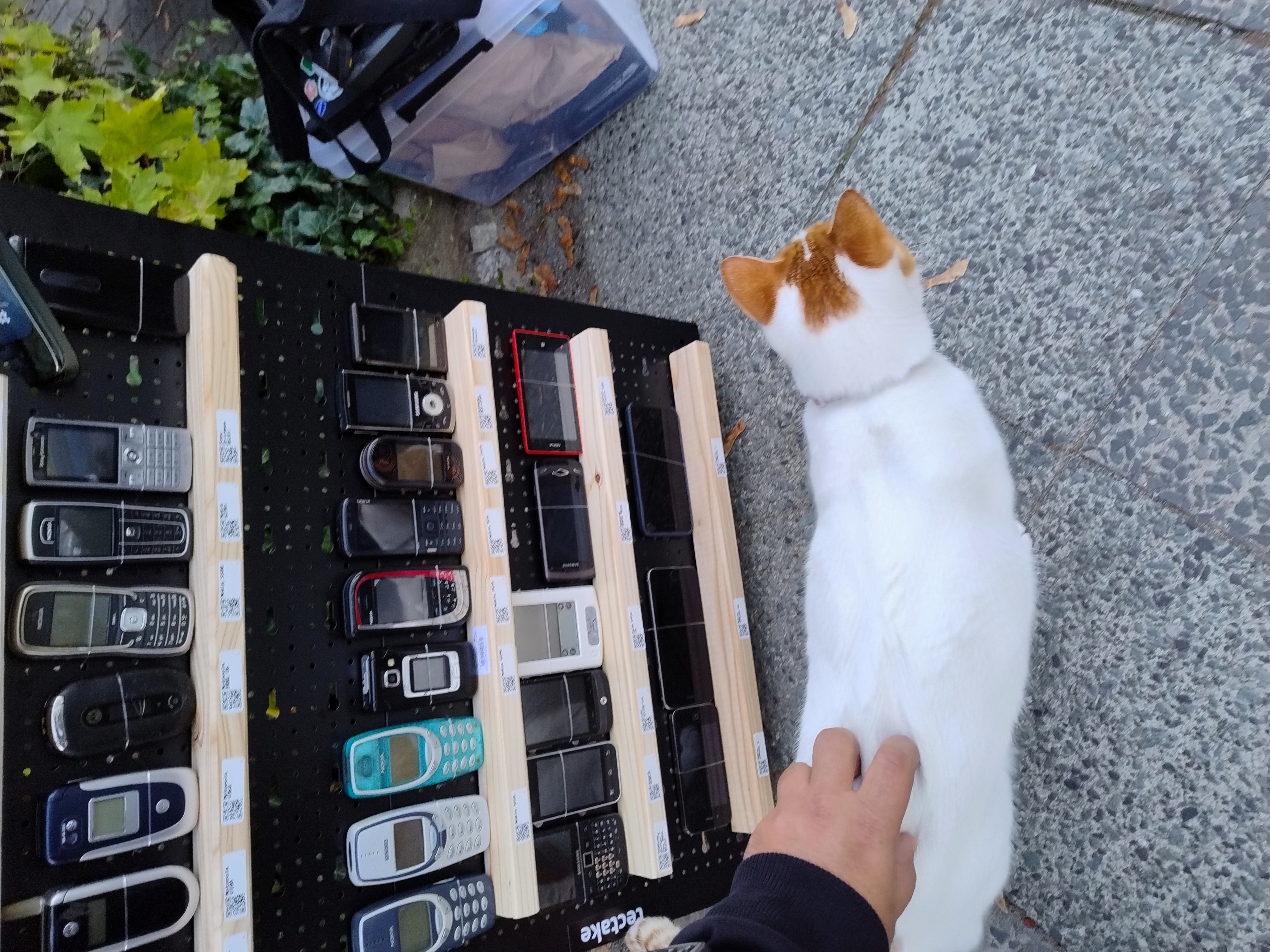
And finally, to avoid getting completely lost in this mess, keep track of the status of every exhibit, and put a little QR-code label next to each shelf, I needed a reliable inventory database.
By that point, I had already been using Homebox for a little over a year, and had even hacked together a microservice for it that generates labels for my Nelko P21 thermal printer. On top of that, I integrated Yourls to create short links to individual pages in my online museum.
A couple of hours every evening for a week — and all three of my display stands were ready for the exhibition!
Once again, assembling everything wasn't enough. I also had to get it all to the exhibition venue. Last time, I somehow managed on my own, using a trolley with straps and boxes with foam inserts. This time, however, I wheeled the fully assembled display stands out onto the pavement in front of my house with the help of a friend who was visiting us, and simply called a cargo taxi.
The nylon lines held the exhibits firmly enough, so I decided not to overcomplicate things: I stacked all three metal structures in the trunk and placed the box alongside them. It turned out to be rather expensive, but at least we got there quickly!
Unloading and setting everything up at the venue went fairly quickly. As usual, the preliminary formalities — such as signing an agreement accepting responsibility for event safety (after all, we're dealing with electronics and old equipment that might be faulty) — were handled at a makeshift reception desk consisting of a small table and a box for distributing badges. I got one of those badges myself.
Inside, all my familiar faces from previous exhibitions were already there, and they had nearly finished setting up their displays. I was allocated three tables and four power adapters. Quite generous!
The mobile phones and PDAs themselves occupied one and a half tables. I left some space on the left for a bottle of water and various obscure chargers, such as Samsung and Motorola ones. The right-hand side, meanwhile, was simply buried under a pile of junk: a box, bags of chargers, a laptop, a router, cables, that very 30-port USB charging station, and, of course, the star of the mobile section at VCFB 2026 — the Motorola WT-4090.
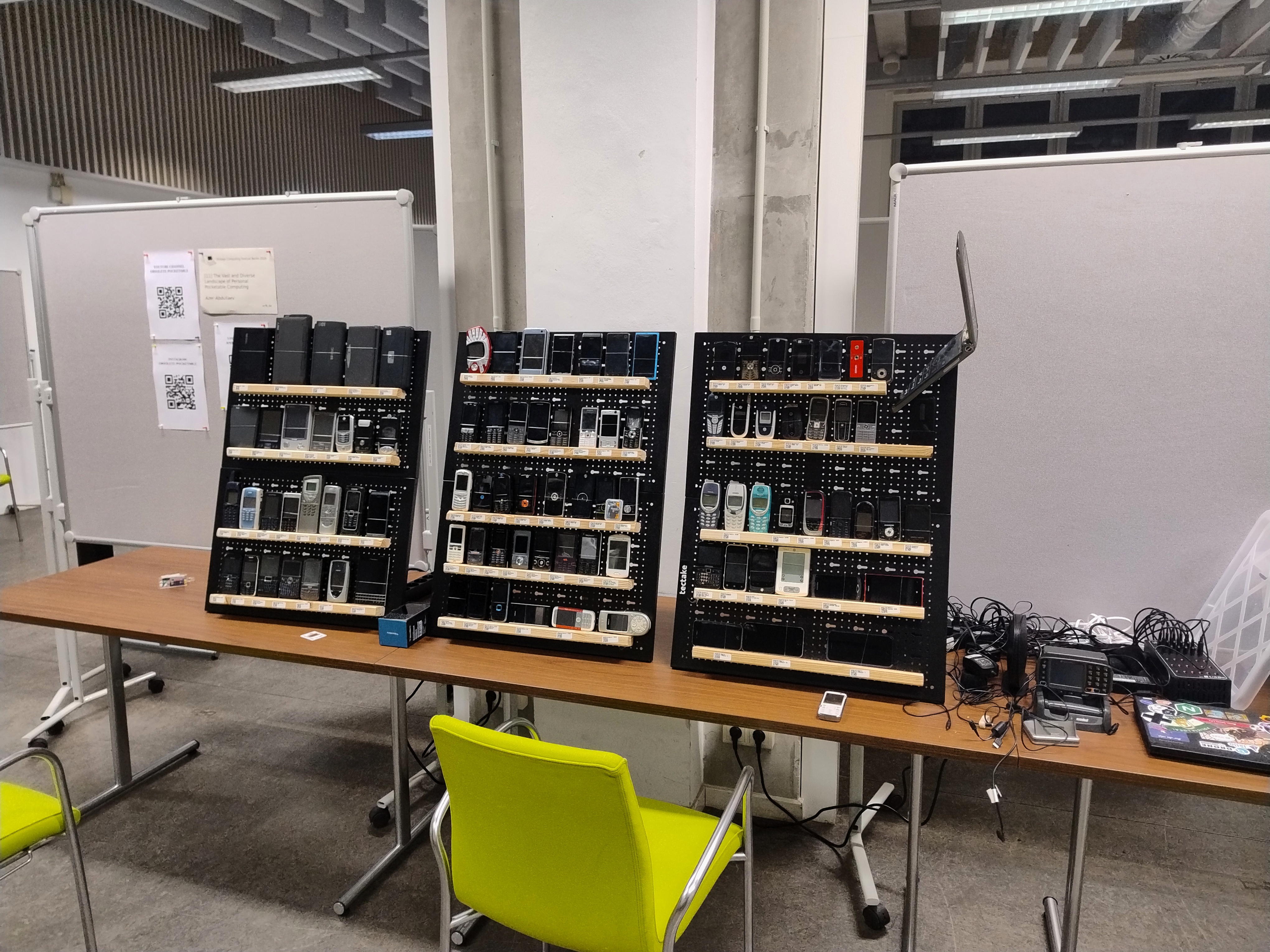
My stand, fully ready for action
Now it was time to take a look around and see what everyone else had brought.
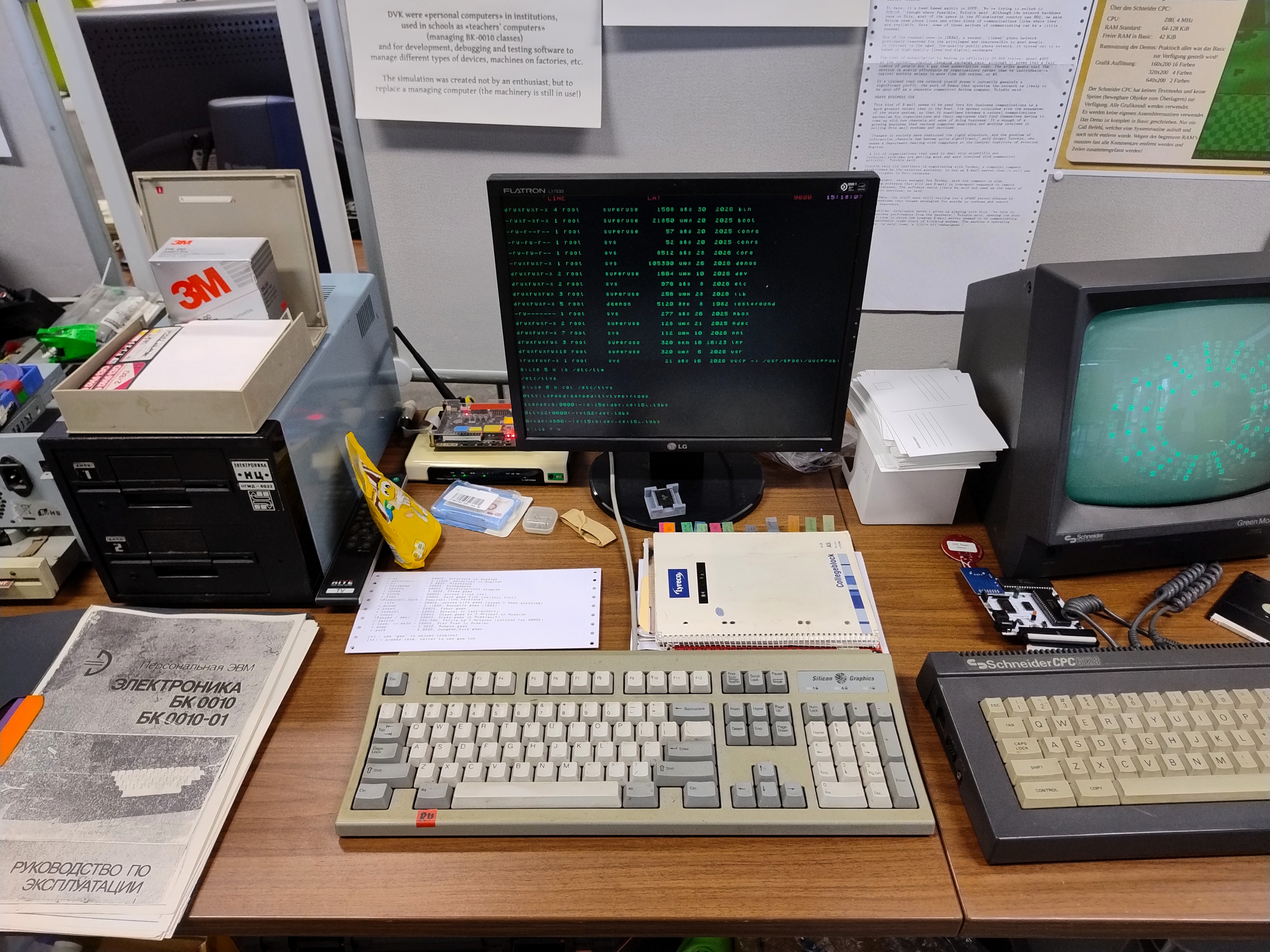
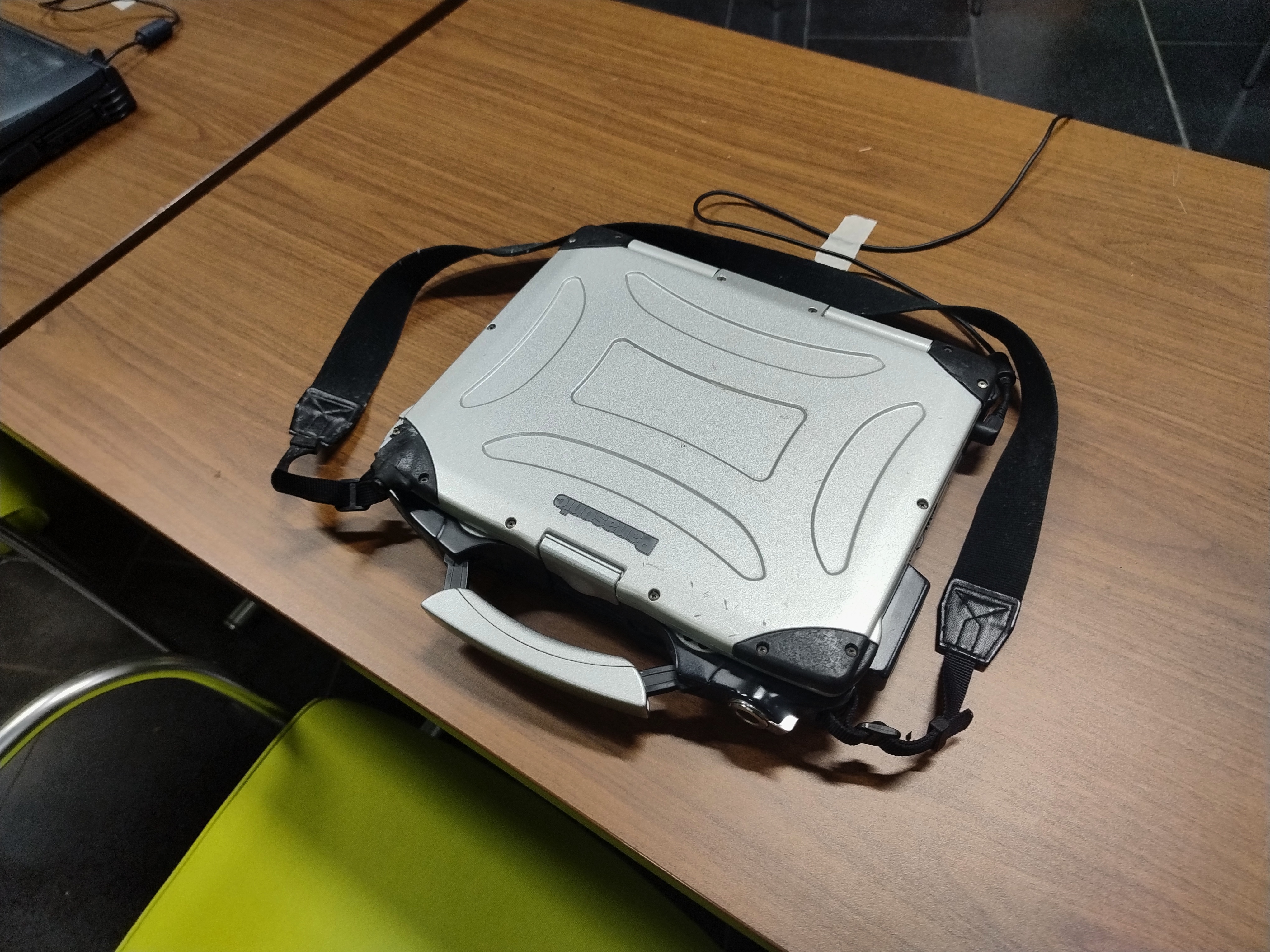
A genuine Panasonic Toughbook in the exhibition's gaming section
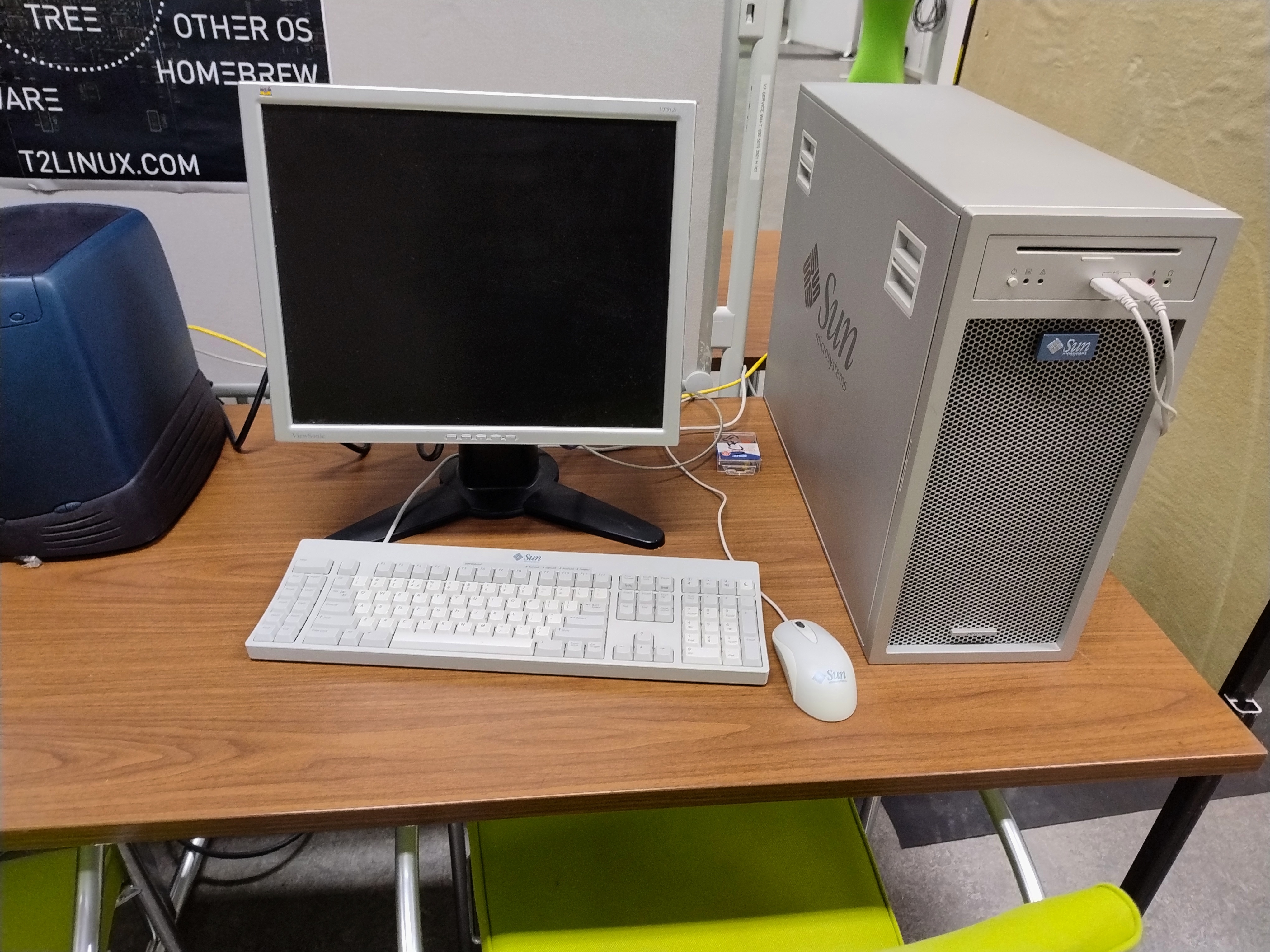
A genuine SUN workstation, now a relic of the past
Meanwhile, dusk was settling in, and I headed home since everything was already prepared. All that remained was to pack myself some snacks for the two days ahead — sandwiches and bananas — stock up on mineral water, and go to bed early.
Adventure awaited!
Day One
The familiar route greeted me with signposts that had already been put up. As always, I shared photos of them across all my channels to make the location easier to identify. I was in fighting spirits and couldn't wait to get started telling stories and showing off my treasures.
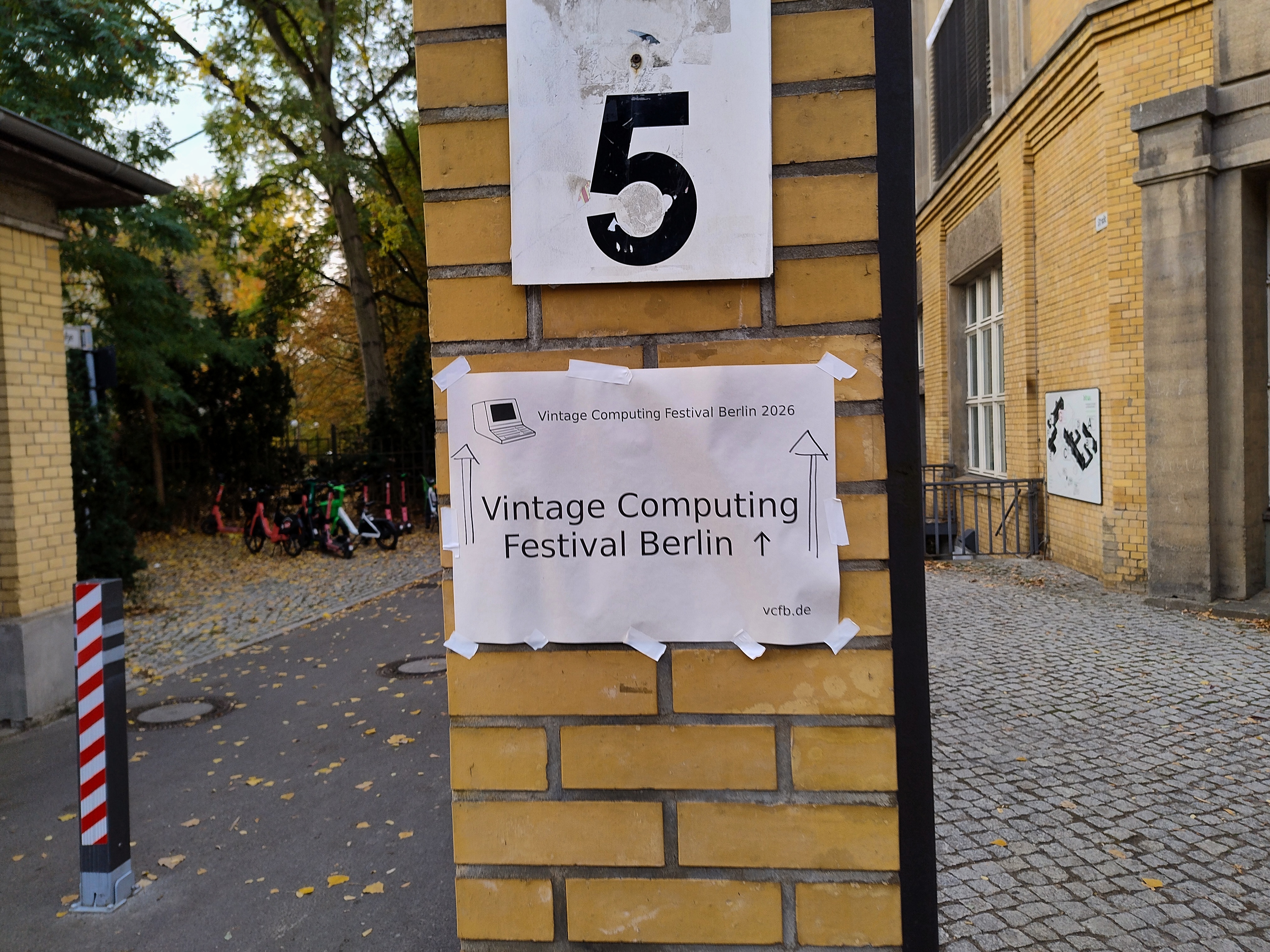
The route to the festival was equipped with signposts
Things were fairly quiet at first, and I even found some time to walk around once more and have a look at everything. I bumped into some familiar exhibitors, and we promised to show each other various interesting — and not-so-new — "new arrivals".
However, as time went by, more and more festival visitors arrived, and there was simply no opportunity left to wander around freely. If only I could find a spare minute to grab a bite to eat!
But I certainly wasn't complaining. As always, the visitors were absolutely wonderful. We laughed, joked, and reminisced about the good old days.
And on the first day, my wife arrived with a friend, which gave me an incredible boost of support. Initially, Maria and I rather clumsily tried to set up a camera and microphone on a phone tripod. But then a much simpler solution presented itself: a professional film crew came and filmed me instead.
The editing should be completed by early 2027, so we're eagerly looking forward to it!
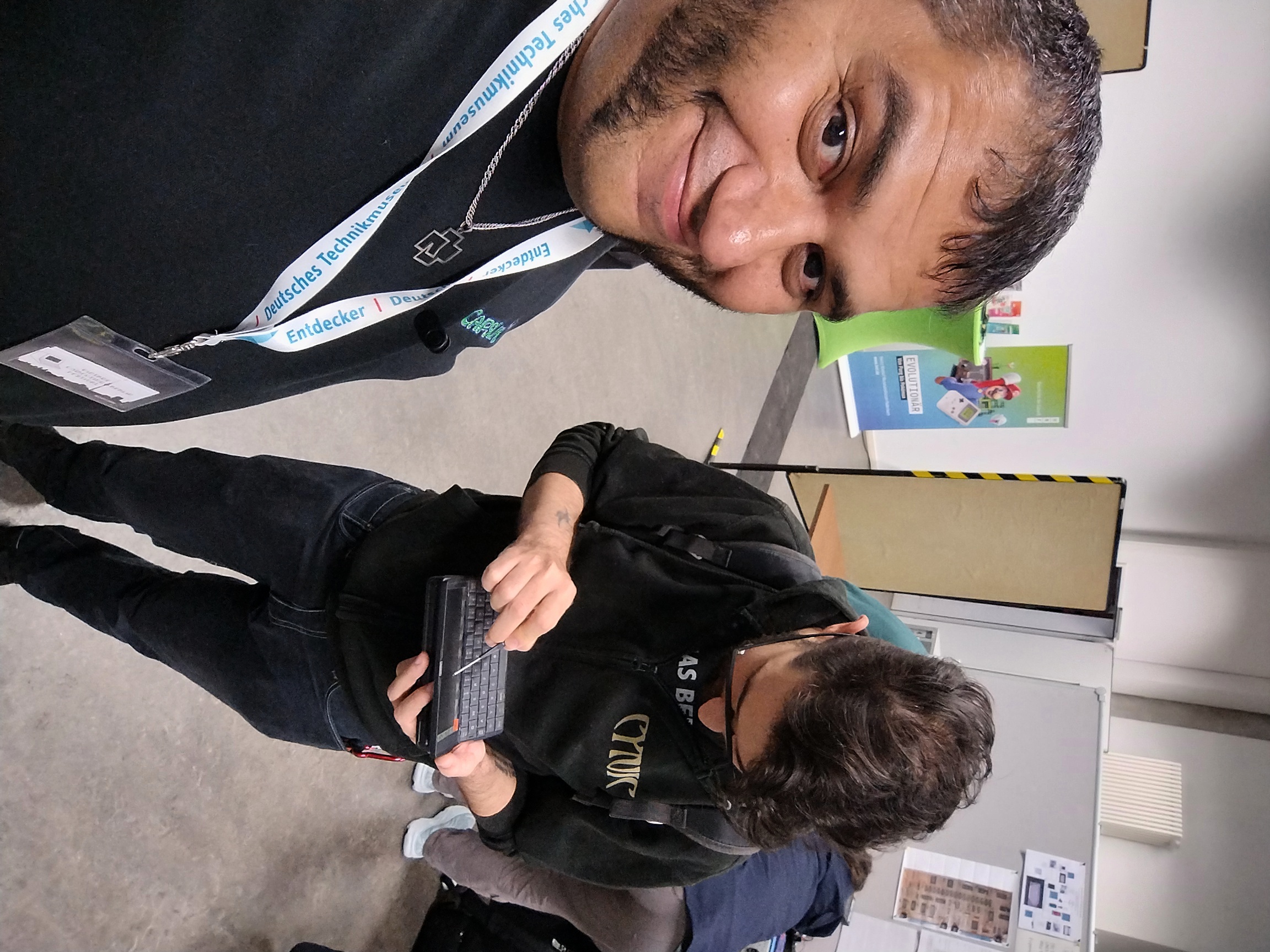
A guest examines the Psion Series 5
Many of the devices in my collection are regulars at these exhibitions, but there was also room for several special gadgets that became the stars of the show.
One example was the gaming smartphone Nokia N-Gage, with its rather controversial design. Among other things, we actually tried to launch Tomb Raider on it.
Unfortunately, the game loaded up to the menu and then crashed with a "Memory card corrupted" error, even though both MMC cards were in perfect working order.
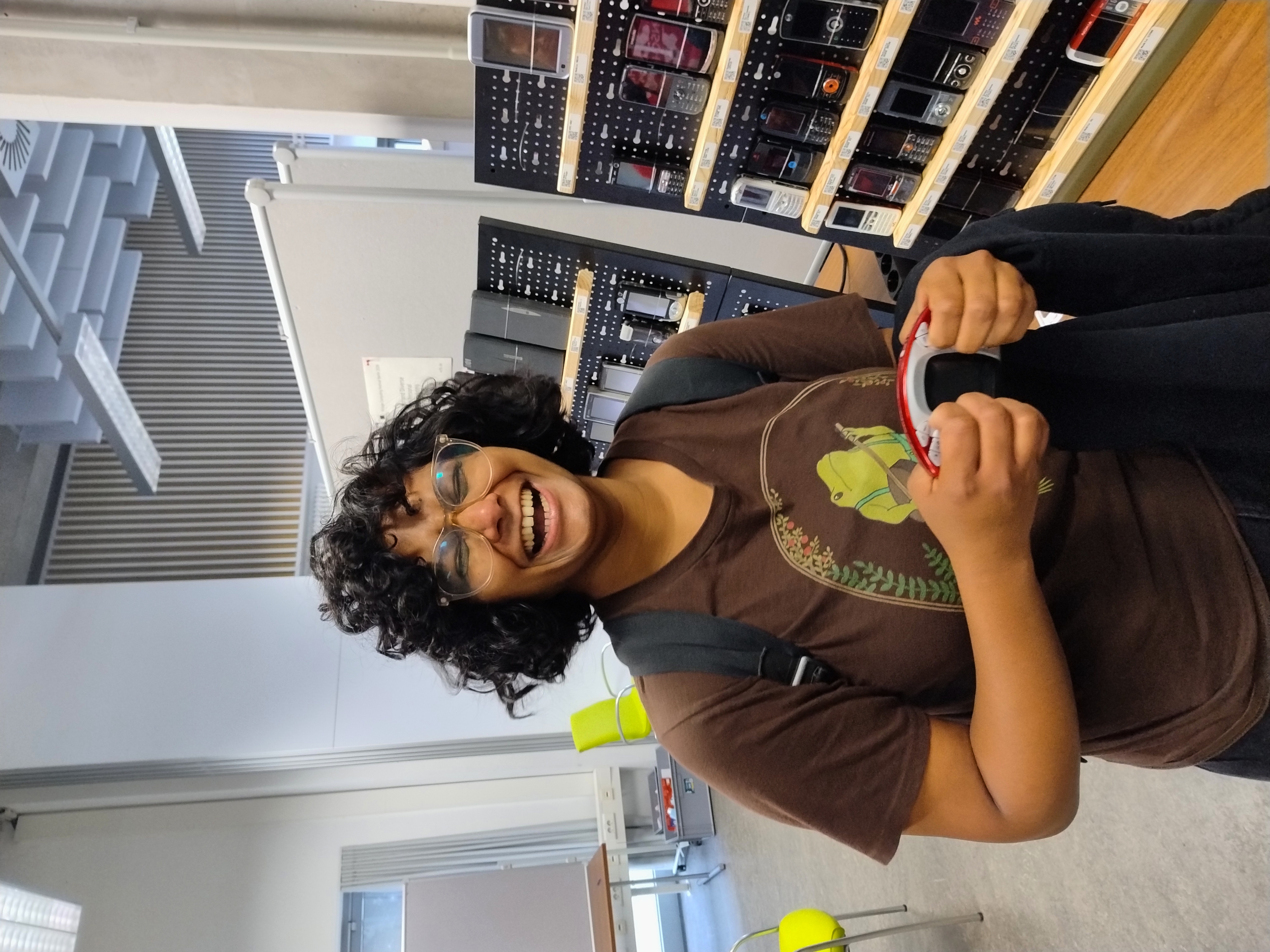
And, of course, we remembered goatse.cx
Another highlight was the rather handsome little brick that is the Sony Ericsson P1i, featuring a rather unusual Half-QWERTY keyboard.
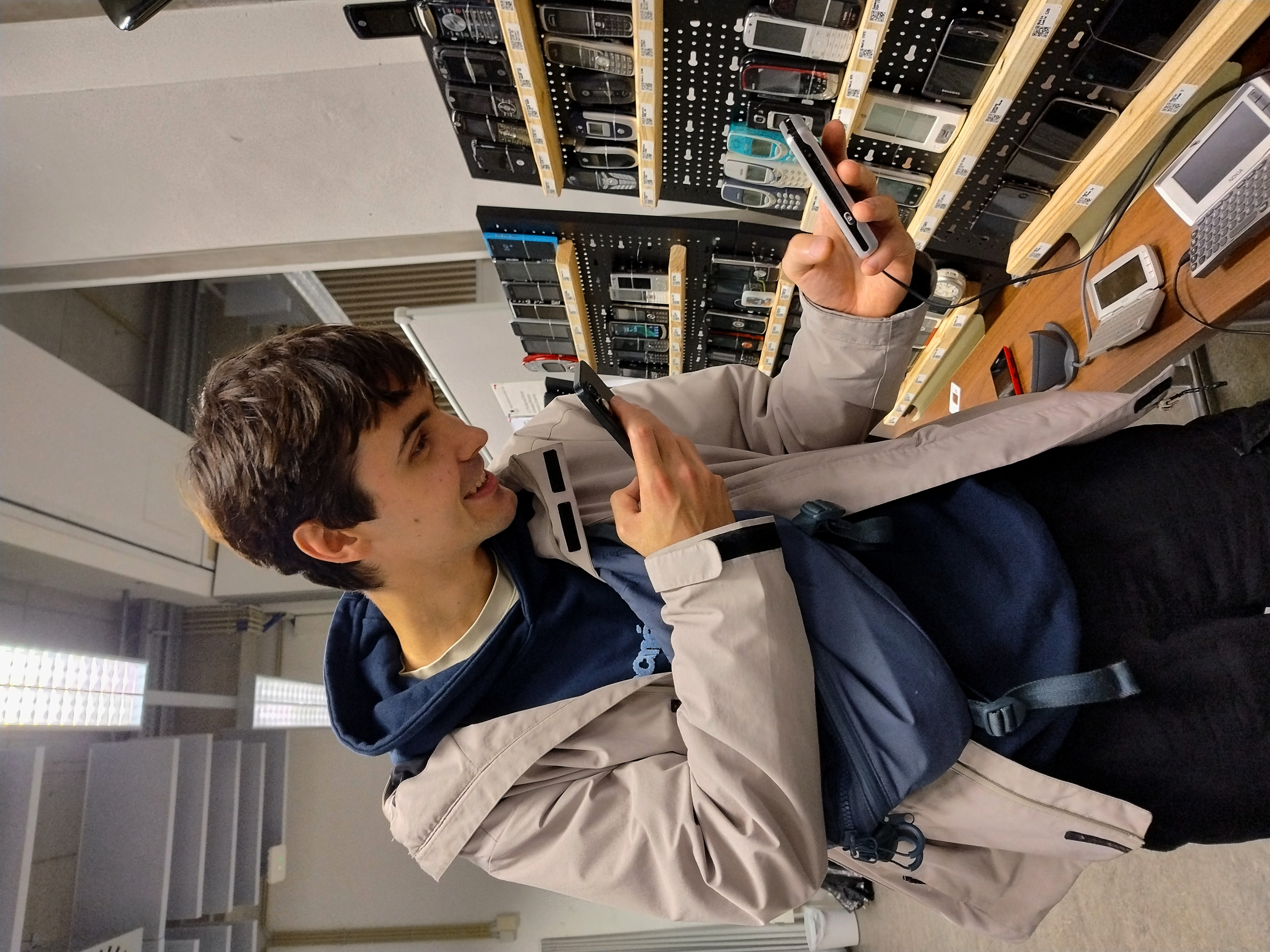
As I mentioned earlier, I was also partly a visitor myself, so people brought me things to have a look at. For example, an engineering prototype of a Microsoft Lumia.
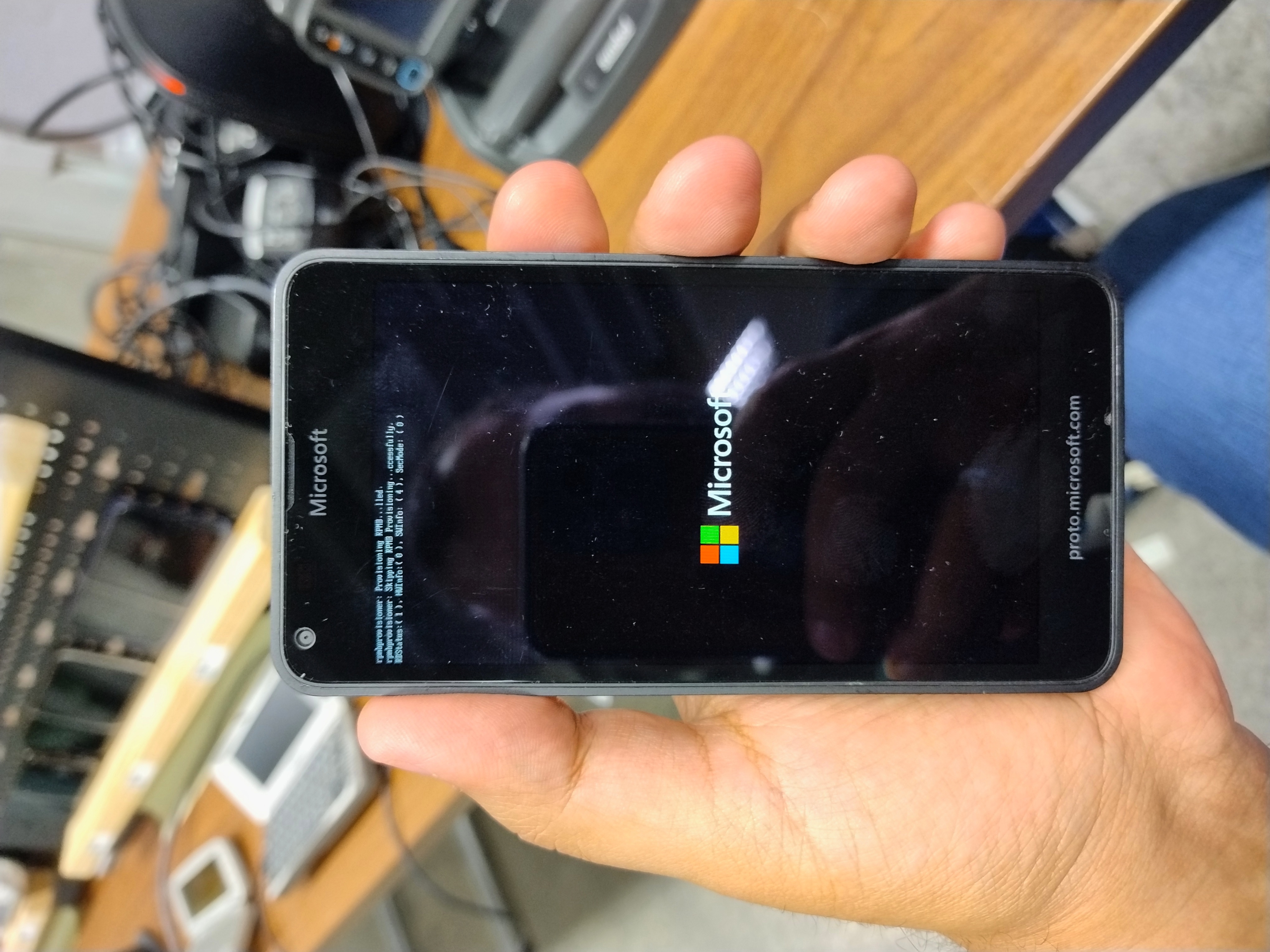
Among other things, I also got to play some console and computer games in a dedicated room.
Mike showed me his laptop collection, told me about the various crazy peripherals from that era, and then sat me down in front of a German driving simulator that taught you how to navigate city streets while following traffic regulations.
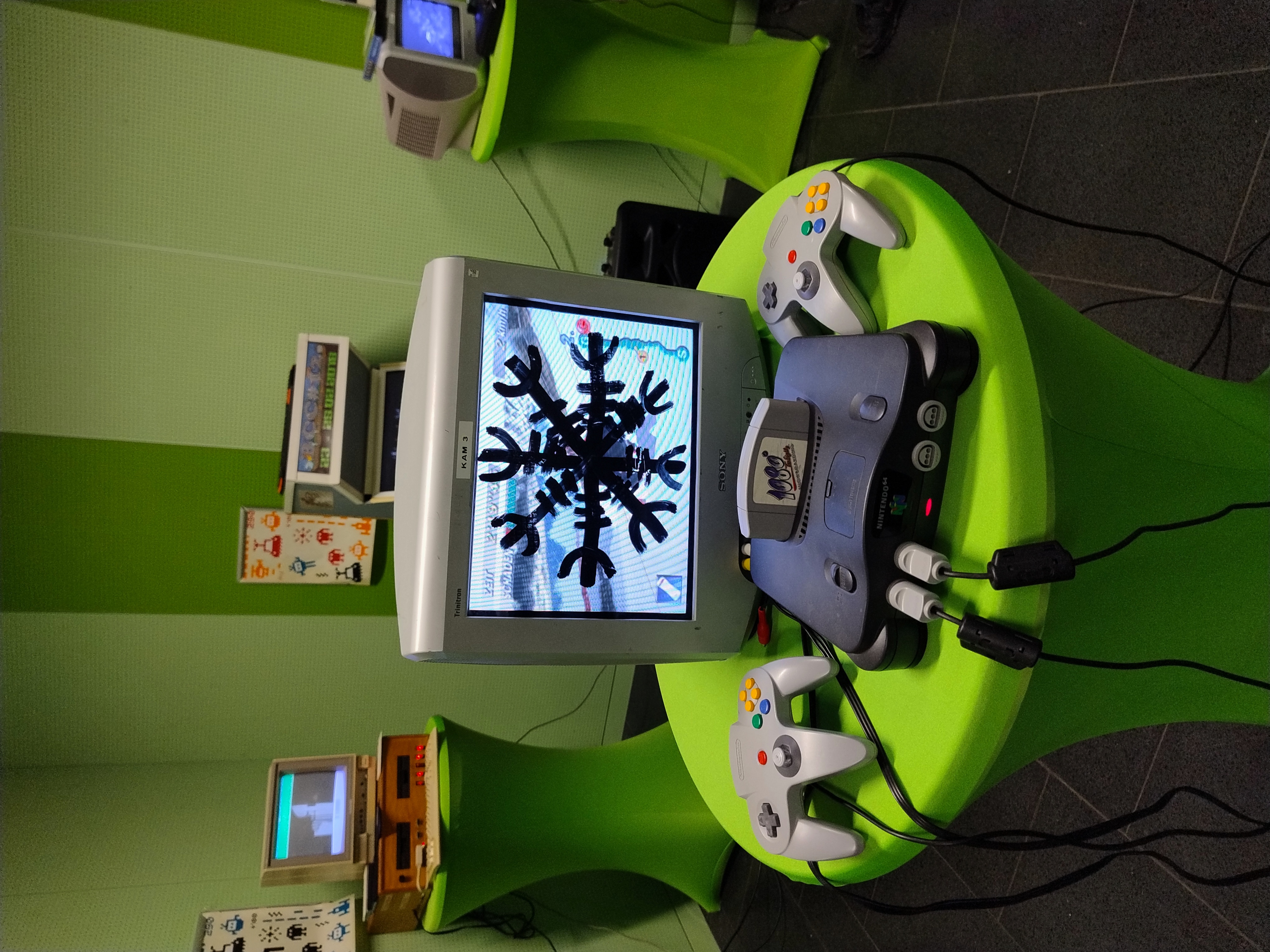
This exhibit served as a mock-up; all the others were fully operational
Unfortunately, not everything went smoothly: while carrying my display stands, I strained my left wrist. Once home, I had to apply Voltaren gel and wrap it in an elastic bandage.
Never mind. We'll get through it!
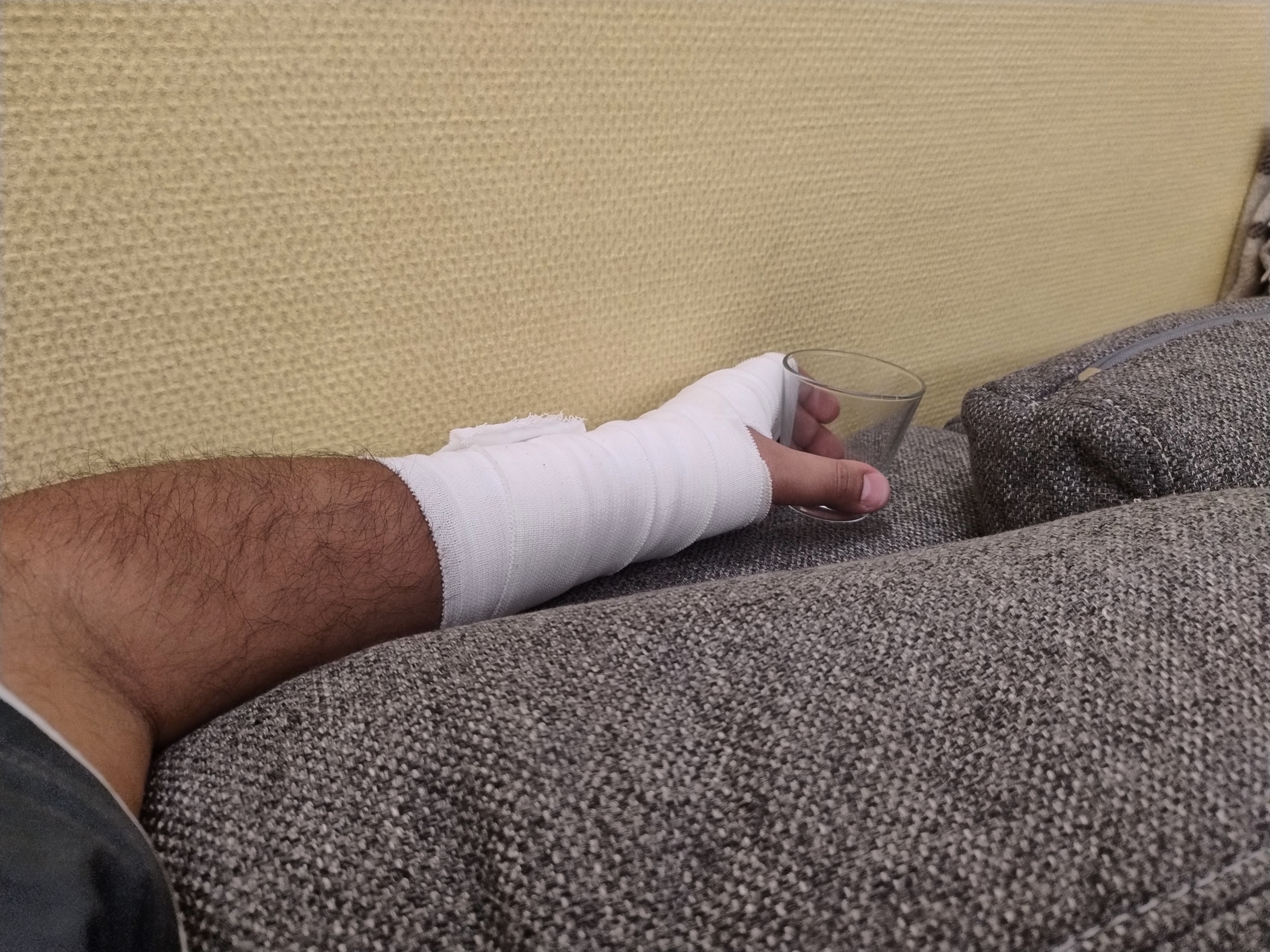
Time to chill and get ready for tomorrow
Day Two
And this is where things really heated up!
There were even more visitors, the stories became even more interesting, and the programme grew even more packed!
The pavilion greeted me with locked doors, but not because I'd been kicked out of the programme — the HTW staff were simply running a little late. Still, I didn't have to wait long; the doors opened ten minutes later.
Out of the corner of my eye, I also noticed that, alongside the exhibition hall, a lecture room was being opened. There must be something interesting going on there!
I took a seat in the third row to listen to what was being presented and perhaps ask a few questions. The presentation was about cataloguing SID music — the kind of music written for the Commodore 64. You can watch the entire presentation here.
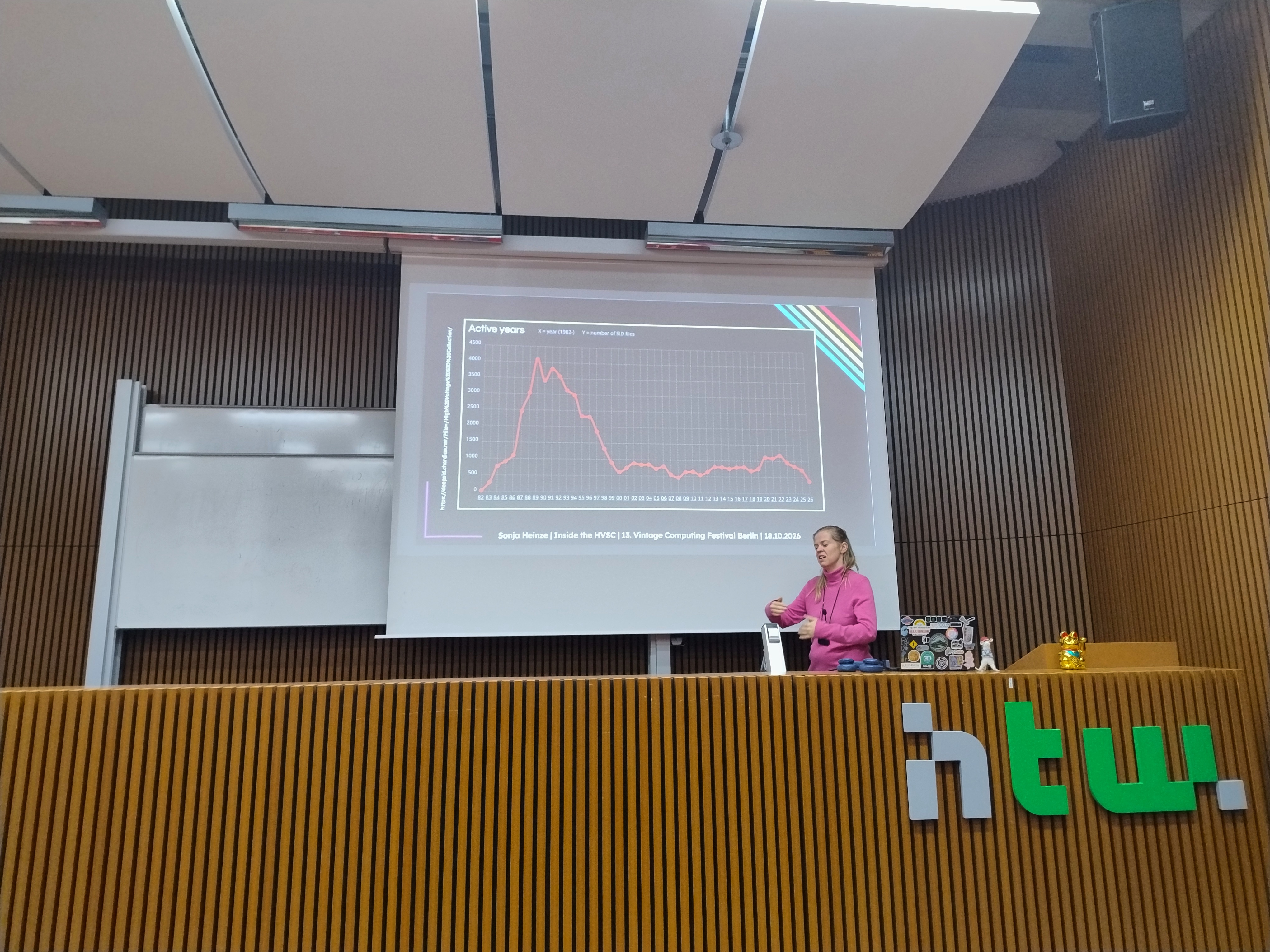
And then it suddenly dawned on me: it was already 11 AM, and I hadn't even made it to my own pavilion yet!
I rushed over just in time, as people were already taking a close look at my collection. I managed fairly well at switching between three languages in my head — English, German, and Russian — while keeping Ukrainian in reserve.
Everything on display was there to be touched, switched on, and explored. Occasionally, batteries in phones or communicators ran flat and needed recharging; sometimes I had to swap SIM cards between devices. But overall, I managed to keep all the balls in the air!
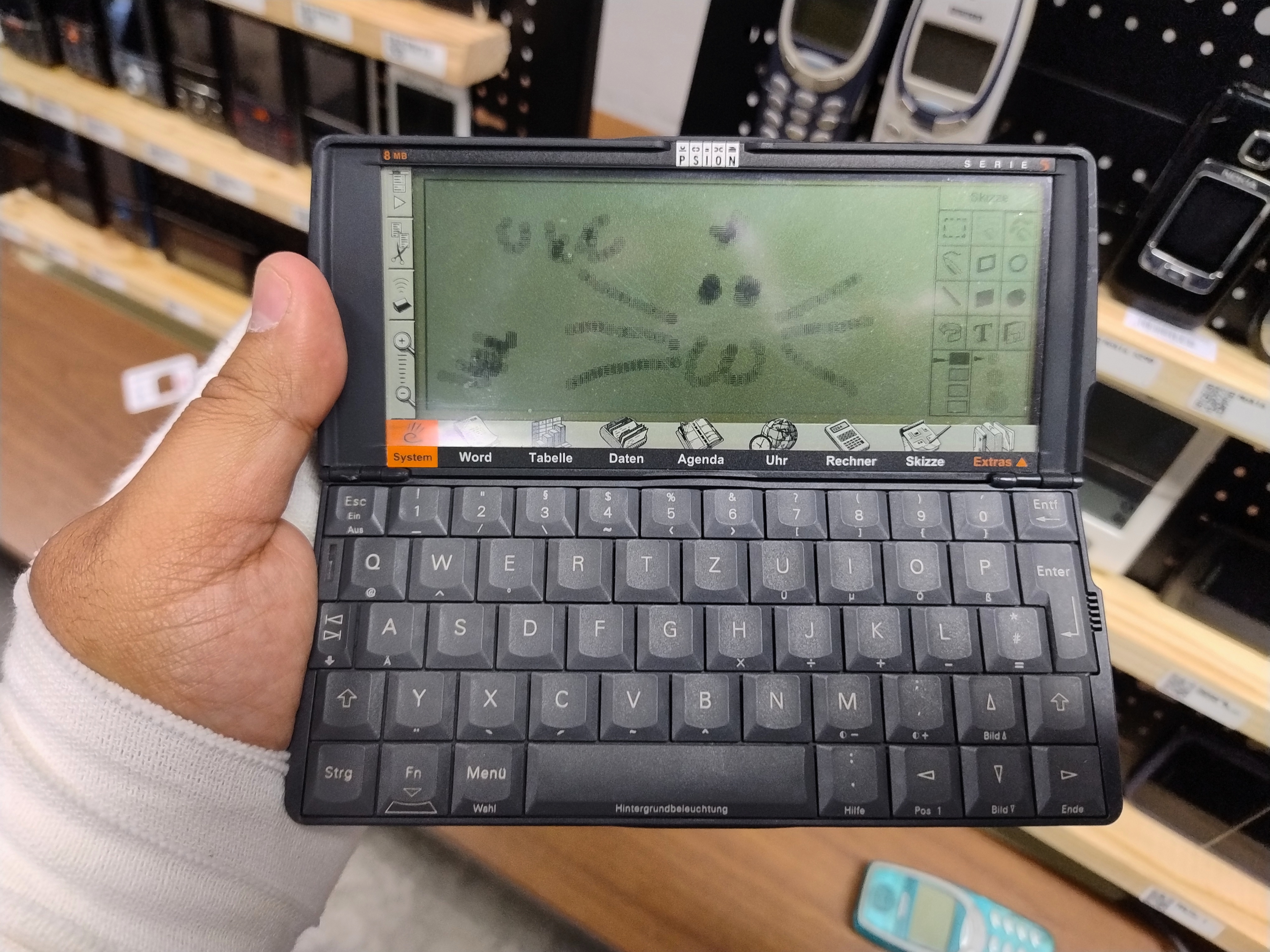
Drawings on the Psion Series 5 — my favourite category of visitor-created artwork
In absolutely every case, I was delighted to demonstrate interesting pieces of technology from the past and actively involve visitors in the experience.
I mentioned the Sony Ericsson P1i earlier for a reason: I chose it as my communicator for chatting over genuine, working ICQ!
And it actually worked!
On my laptop, I set up the open-oscar server, installed the original ICQ 5.1 client under Wine, and connected an old Belkin router to the network, because the P1i doesn't support any Wi-Fi encryption beyond WEP.
The spectators were absolutely thrilled!
Once again, the room was pierced by that shrill, obnoxious "a-ow" sound — the ICQ incoming message notification.
Our time machine had taken us 20 years into the past, to simpler times when WhatsApp, Instagram, TikTok, and YouTube didn't exist, and tech-savvy youngsters were just discovering how to pay much less for short messages than mobile operators wanted to charge them.
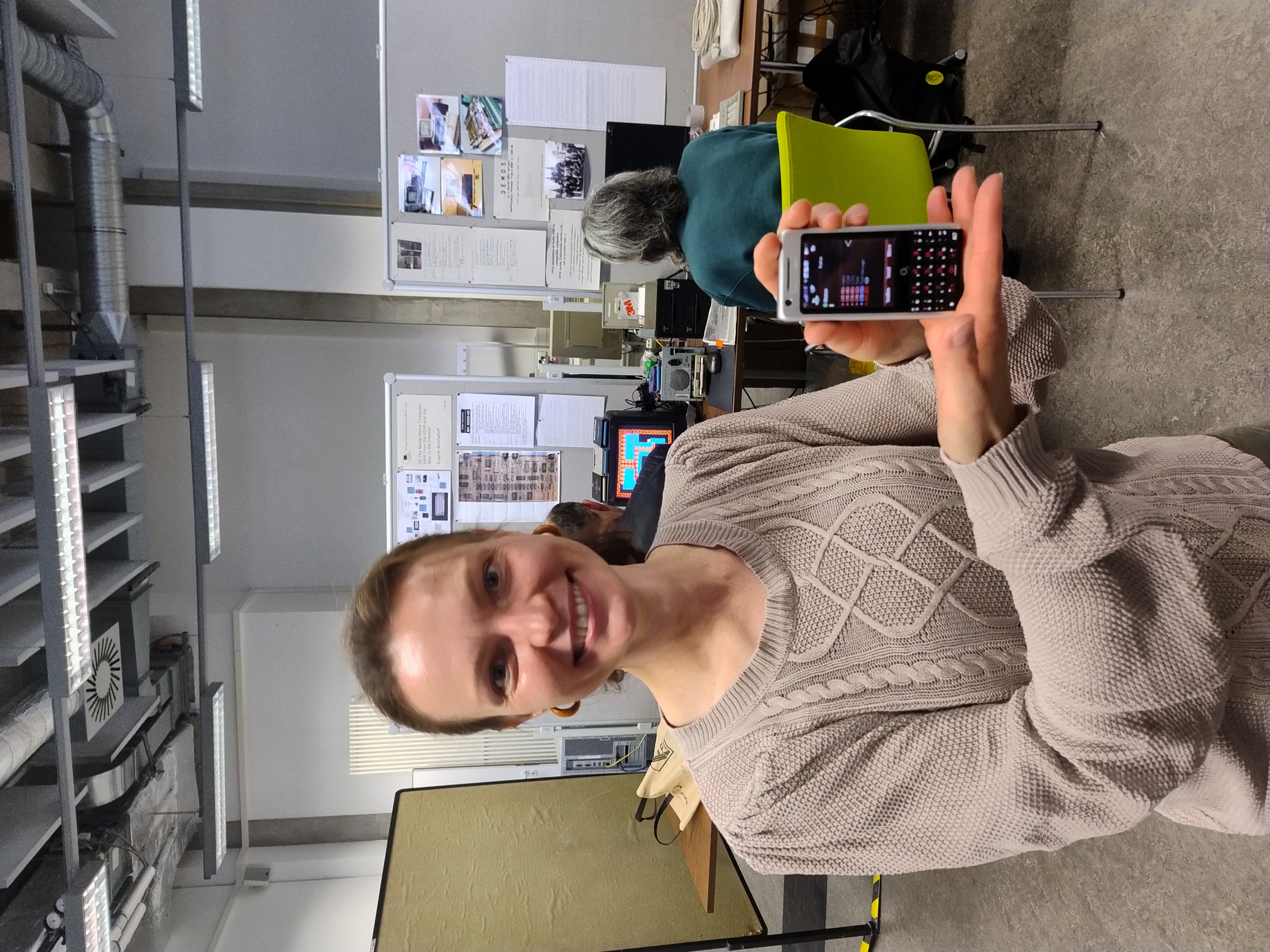
Launching the Qip messenger on the P1i and connecting to ICQ
Meanwhile, the stream of visitors showed no signs of stopping!
I could afford the luxury of basking in the warmth of everyone's support, which I could feel coming from all directions.
Mikhail Klimaryov, aka "ZaTelecom" dropped by, and we spent quite some time discussing one particularly impressive addition to my collection: the Ericsson R380s.
This was the first cellular device to be marketed using the term "smartphone". Nokia subsequently made extensive use of this marketing label, but it only truly became firmly established in consumers' minds with the arrival of the first iPhone.
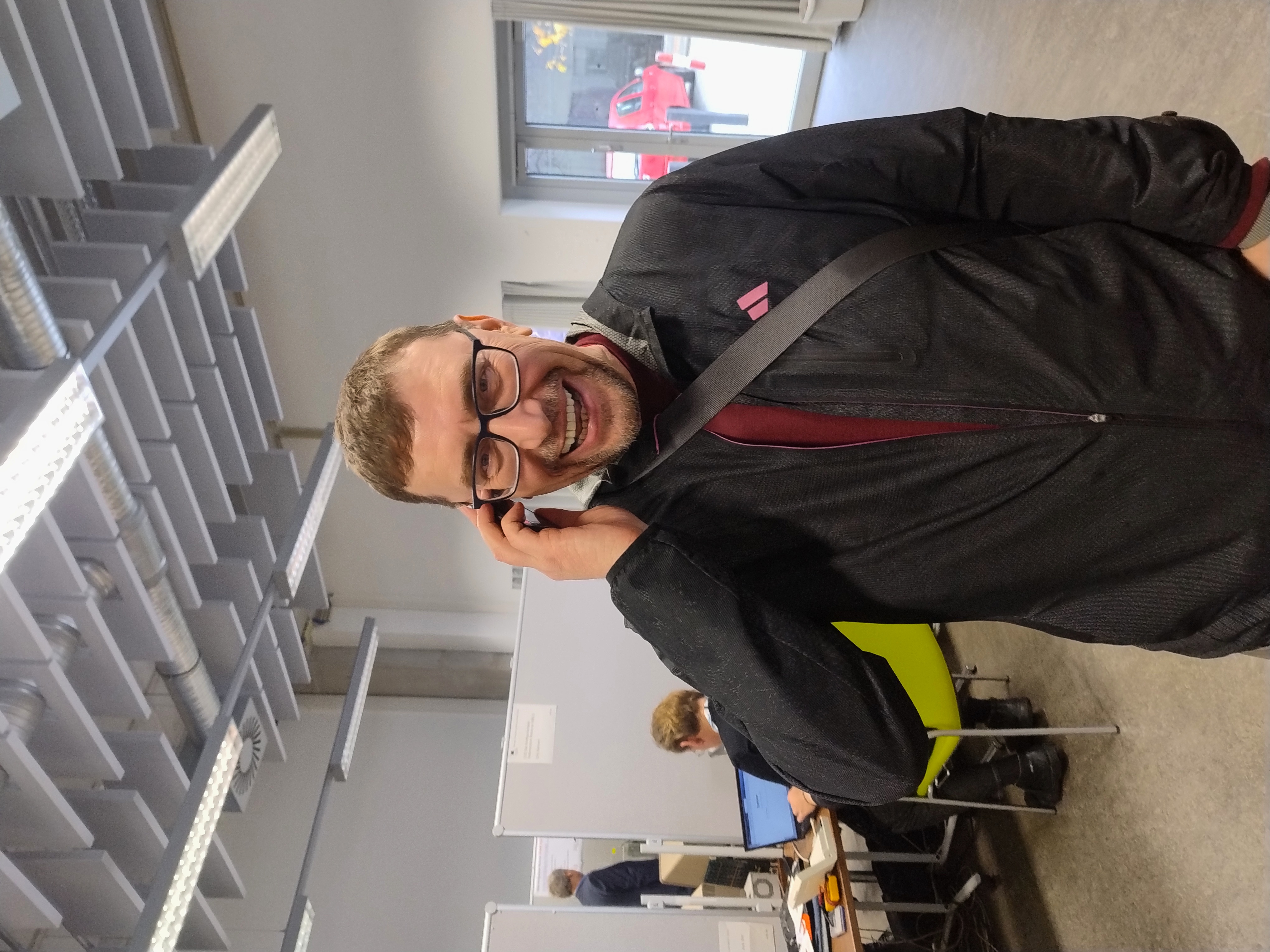
Mikhail reminisces about how it all happened
My dear colleague Zahra also came along with her husband. Together, we reminisced about the devices we used to carry in our pockets.
Zahra's memories were mostly filled with Nokia phones, while Motorola products were harder to recall, since Iran was under US sanctions throughout the formative years of mobile communications.
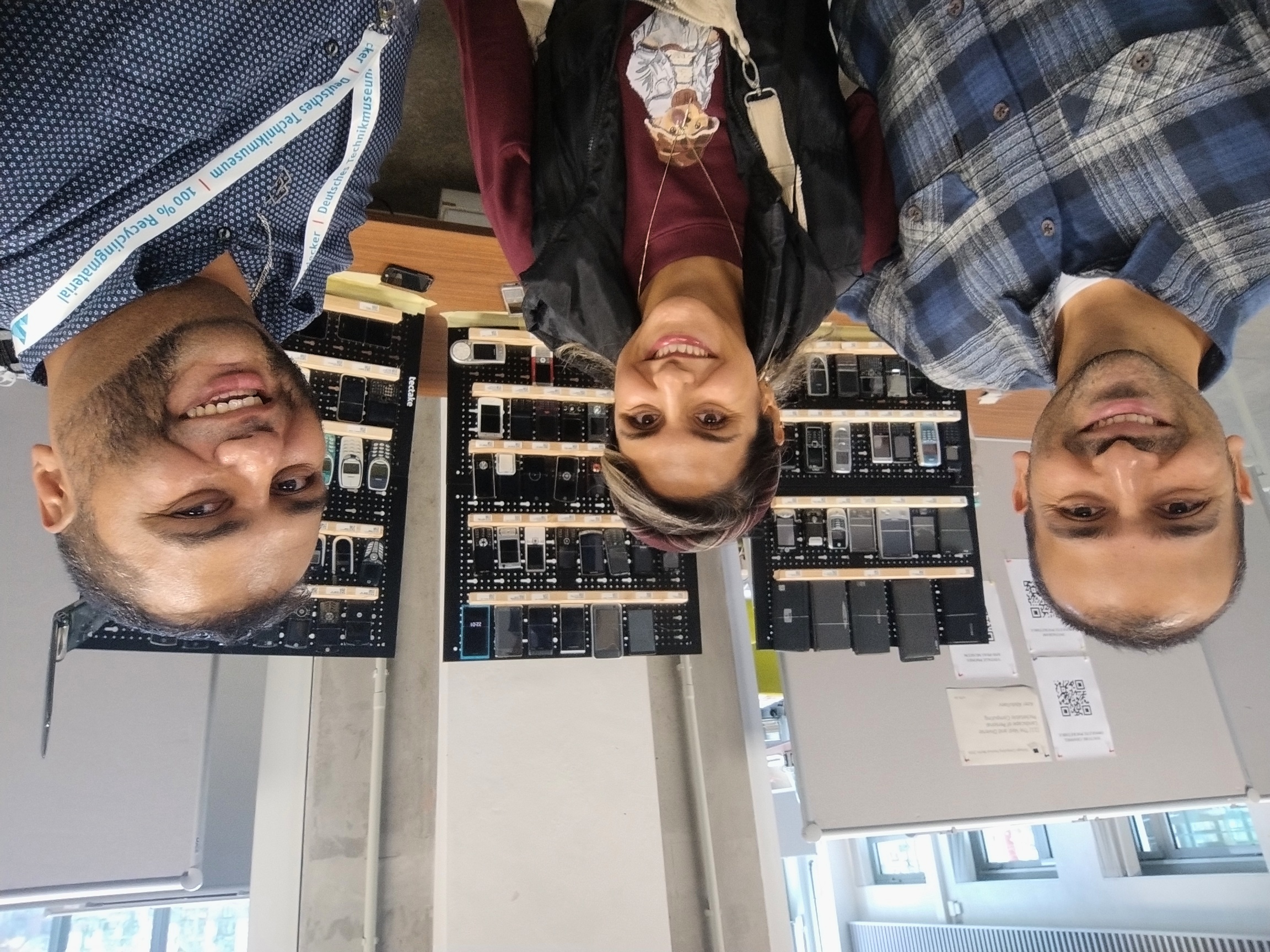
Zahra and her husband came to show their support
Such distinctions were not exclusively, or even primarily, a matter of sanctions and sectoral policies.
For a long time, there simply wasn't a market for handheld computers in the countries of the former Soviet Union, precisely during the period when Palm was becoming popular. Then, in the early 2000s, Microsoft arrived with its Pocket PC, later Windows Mobile, and flooded the market with money.
Even so, PDAs remained largely expensive toys for wealthy kids in the capital cities.
But let's get back to the exhibition.
Something unexpected happened: a fellow exhibitor brought along an incredibly rare piece of equipment that was a perfect fit for my display — a forensics kit capable of extracting practically any data from virtually any mobile phone and, as a bonus, cloning SIM cards!
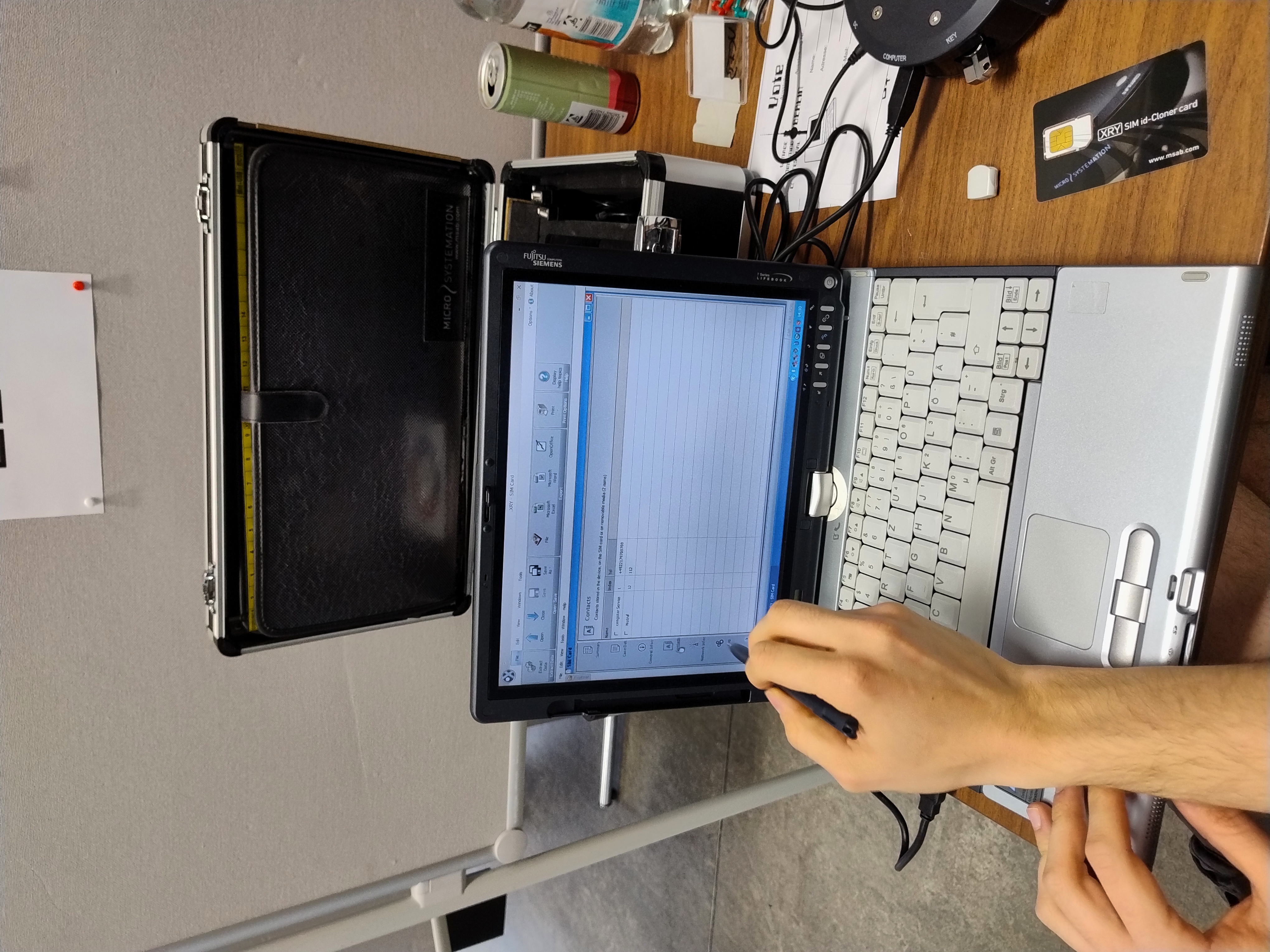
We couldn't resist finding a guinea pig for our experiments. The unfortunate victim was an inside-out clamshell Motorola A780.
It worked flawlessly: the data was successfully copied, and, as a little bonus, we even cloned the SIM card.
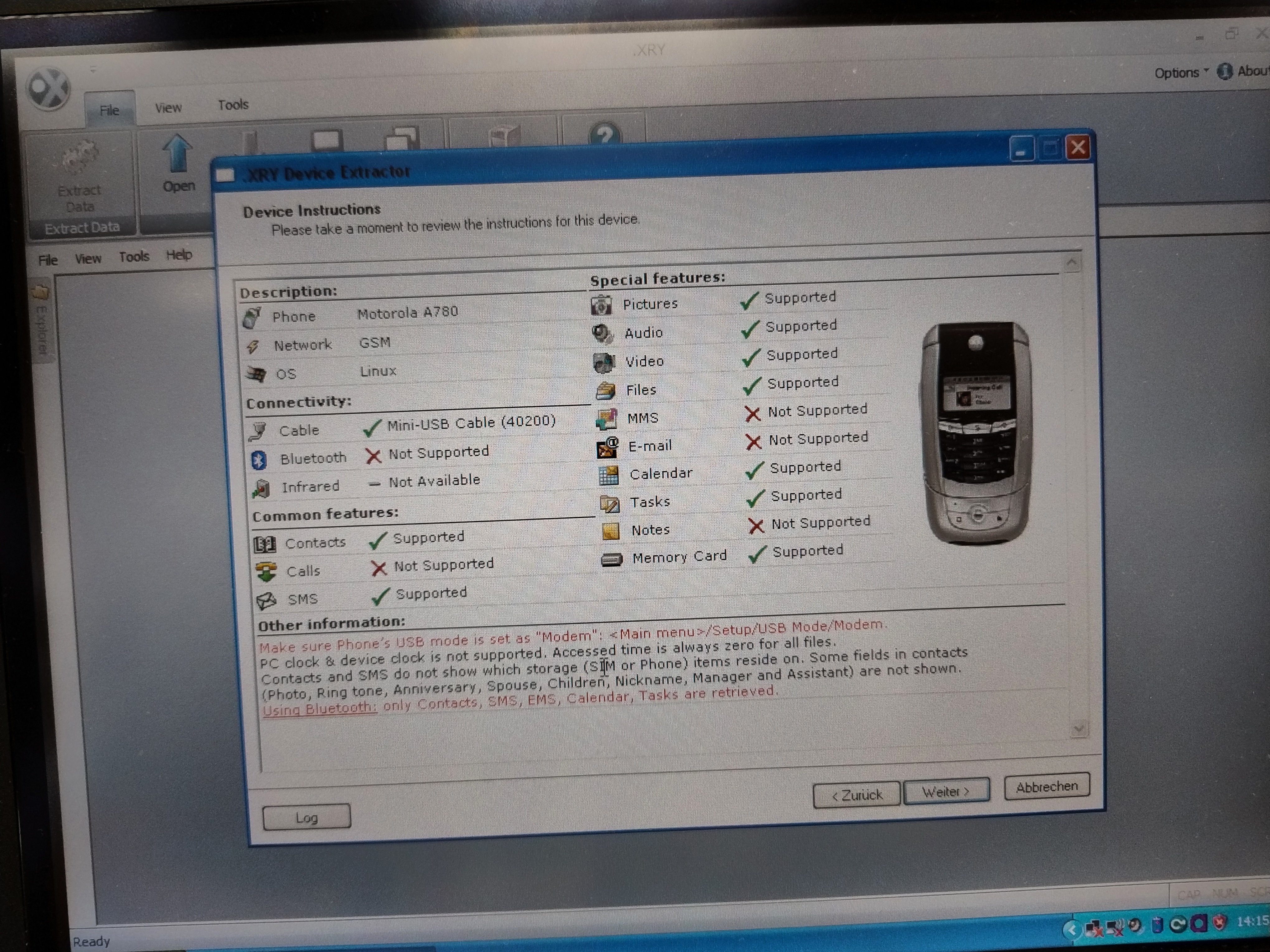
Apparently, nobody was particularly concerned about data protection back then
Incidentally, these experiments were no reason to stop telling visitors about the history of handheld computing, even for a minute.
To my delight, some visitors who remembered me from previous VCFB exhibitions also came by.
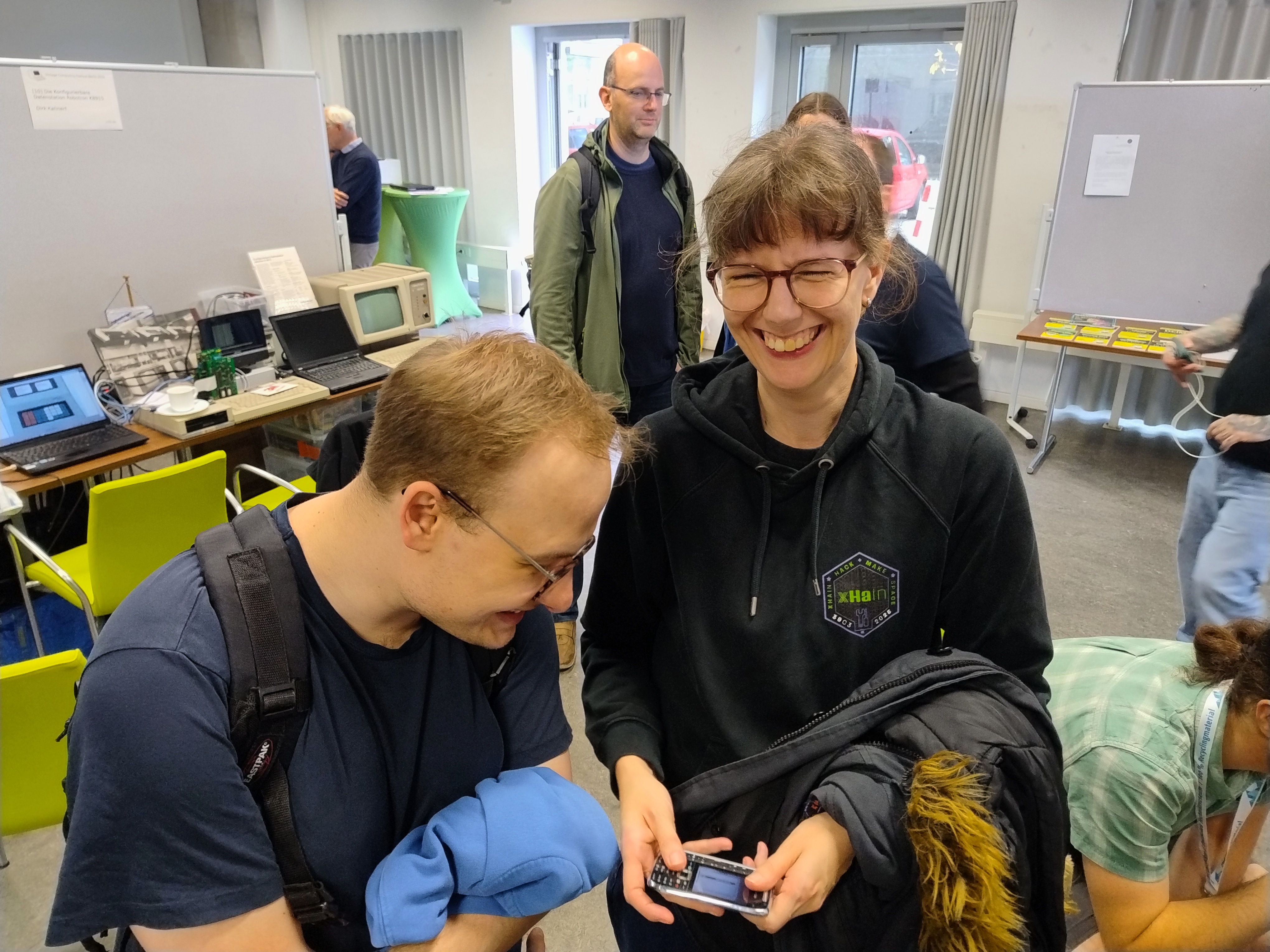
@demarin, if you're reading this, just know that you and your partner are absolutely awesome, and your smiles make the world a better place!
Oh, right! I almost forgot. I promised to tell you about the star attraction, the Motorola WT-4090.
This is neither a phone nor a handheld computer, although, judging by the evolutionary family tree of its operating system, it is a direct descendant of both.
It's a wearable warehouse computer with an attachable barcode scanner that you wear on your finger.
Of course, many people immediately recognised it as the famous Pip-Boy computer from the Fallout game universe. However, that wasn't what I had prepared it for, although I could certainly have put together some sort of HTML page with GIF animations.
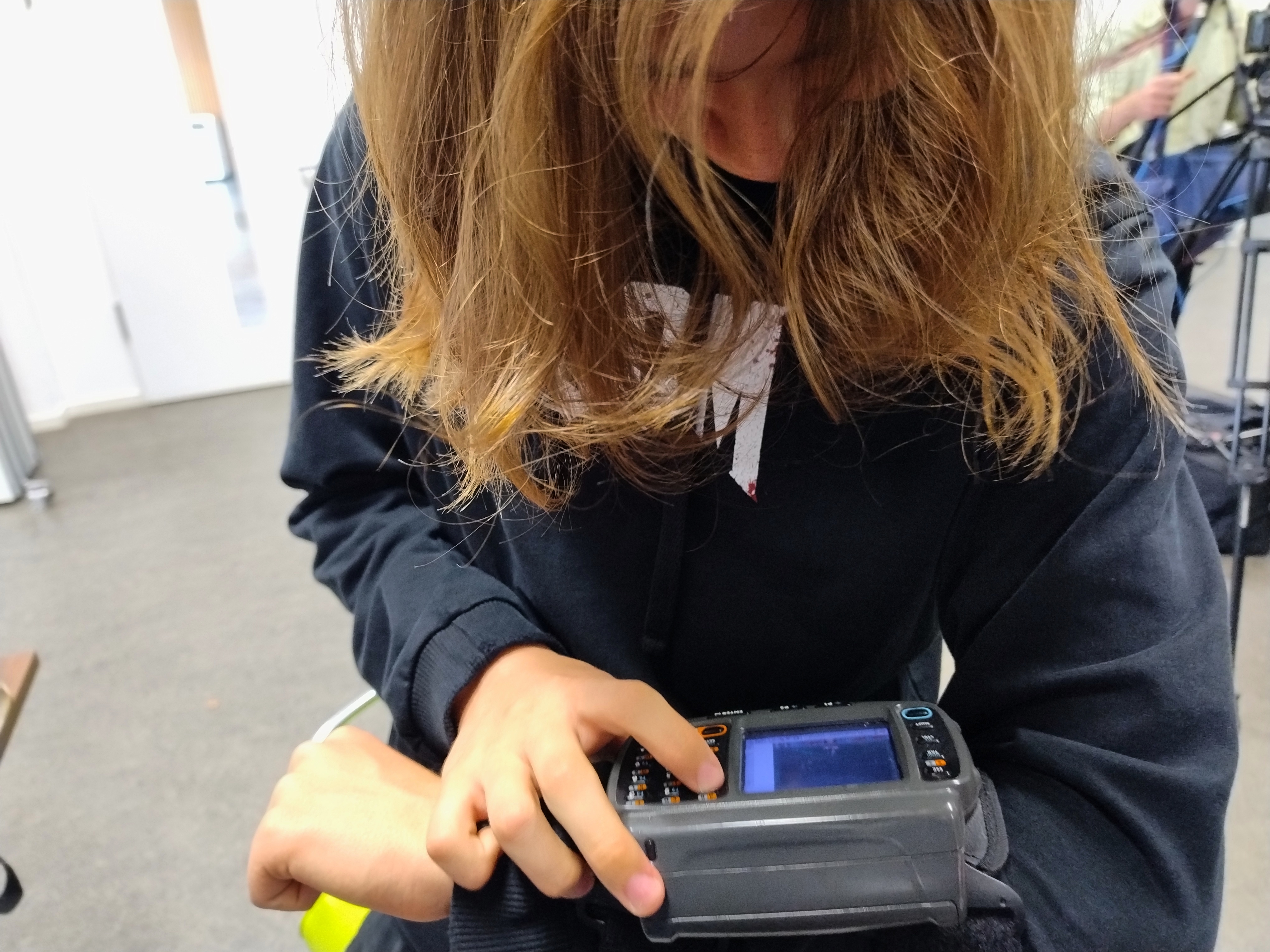
A young visitor happened to be in just the right place at the right time
A teenager wearing a hoodie with the Doom game logo walked past my stand.
You can probably guess where this was going.
That's right! If something runs Windows CE and has reasonably convenient buttons, installing a Doom port on it is a piece of cake.
I strapped the device onto the lad's arm and showed him the controls. He was absolutely blown away.
You really had to be there to see it and experience it. He was completely immersed and genuinely happy.
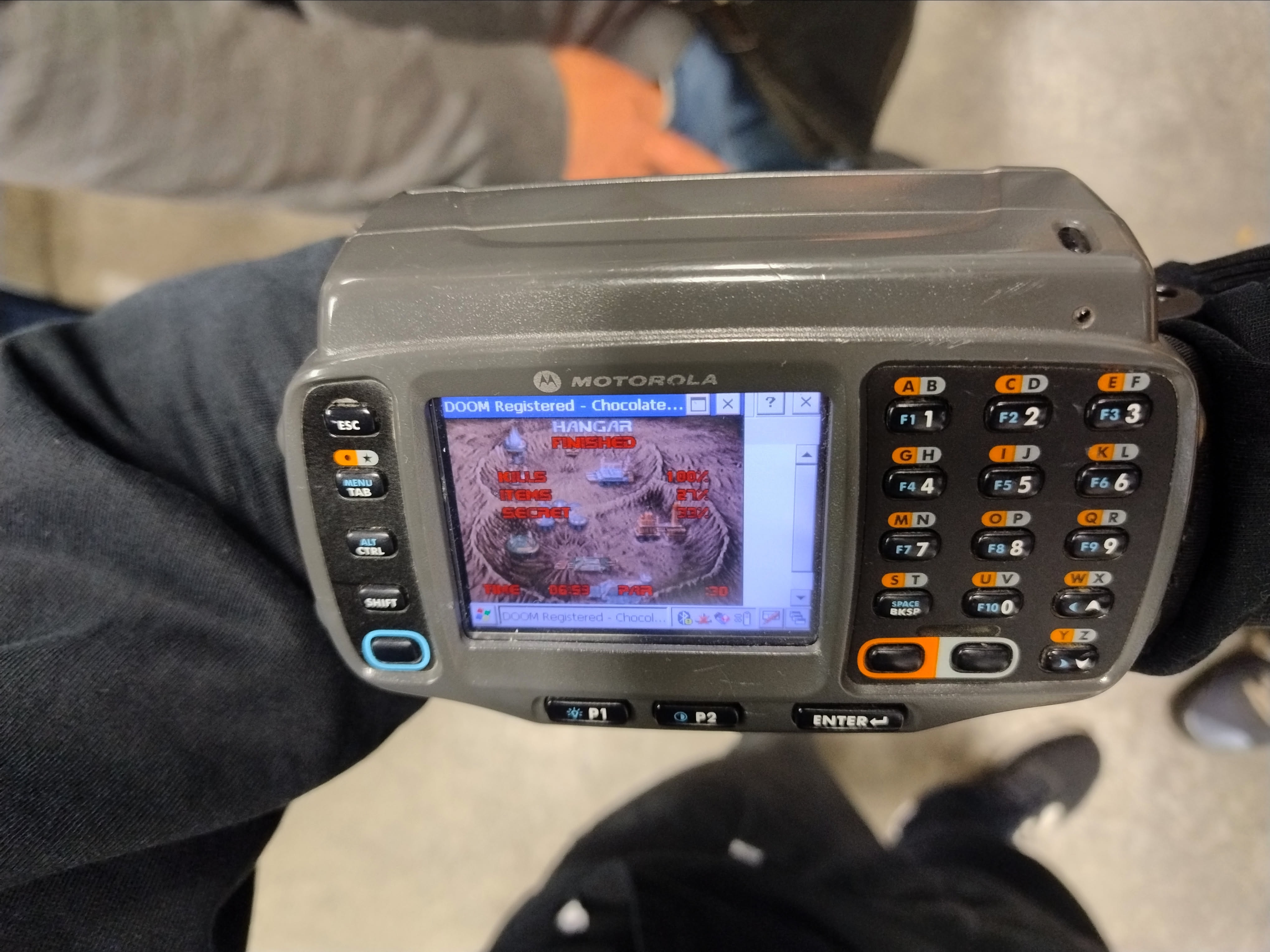
The young visitor lived up to all expectations: he completed level E1M1
Towards the evening, an old friend dropped by: Oleg, aka NetBug.
And he didn't come empty-handed. He brought along a genuine, fully working Toshiba Libretto subnotebook.
We spent some time debating whether the Libretto qualified as a handheld device. Then we tried slipping it into the back pocket of my trousers, and eventually concluded that, yes, it certainly did.
Later, Oleg became very actively involved in demonstrating my collection, taking over the right flank and giving me an opportunity to catch my breath and grab something to eat.
Finally, he also removed the lock on my BlackBerry Passport, which I had once bought at a flea market for five euros.
Let this post serve as a formal acknowledgement that I owe Oleg a beer for that!
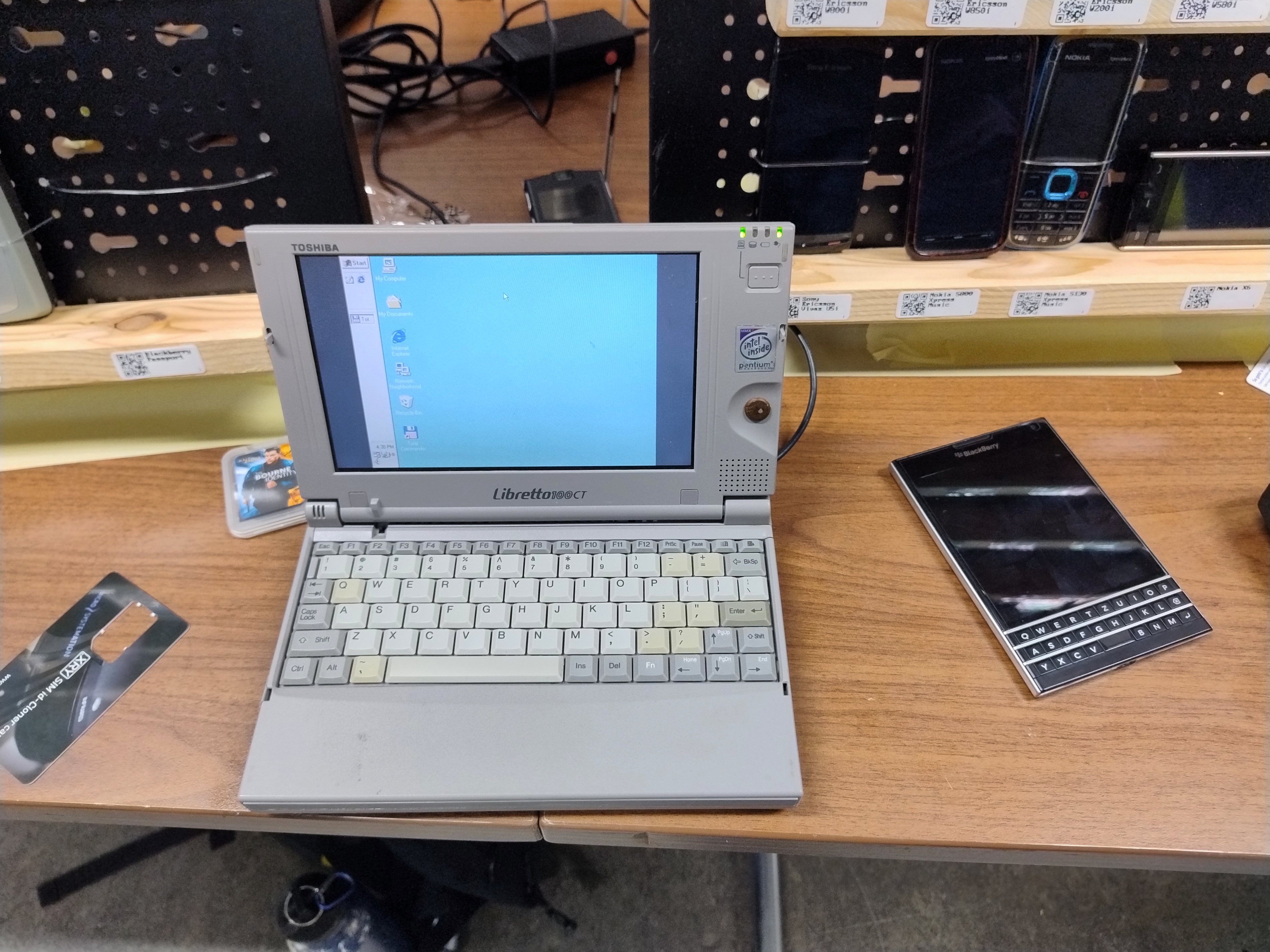
Finally, it was time to pack everything up.
My friend Ilya arrived and helped me dismantle the display stands. In between, there were occasional conversations among the exhibitors.
As Richard, the owner of my favourite VCFB pavilion, put it:
"We are here to get older together."
Conclusion
As always, the greatest reward VCFB offers me is the smiles and genuine emotions of its visitors.
That's exactly why I come here: to recharge my batteries for the coming year and finally avoid losing faith in humanity altogether. Well, perhaps also to make a few interesting new friendships along the way.
But the 2026 edition brought an unexpected bonus: my pavilion was voted the audience favourite and declared the best exhibition, for which I won a commemorative T-shirt trophy!
All of this is thanks to your support! Without you, dear visitors, none of this would have meant anything.
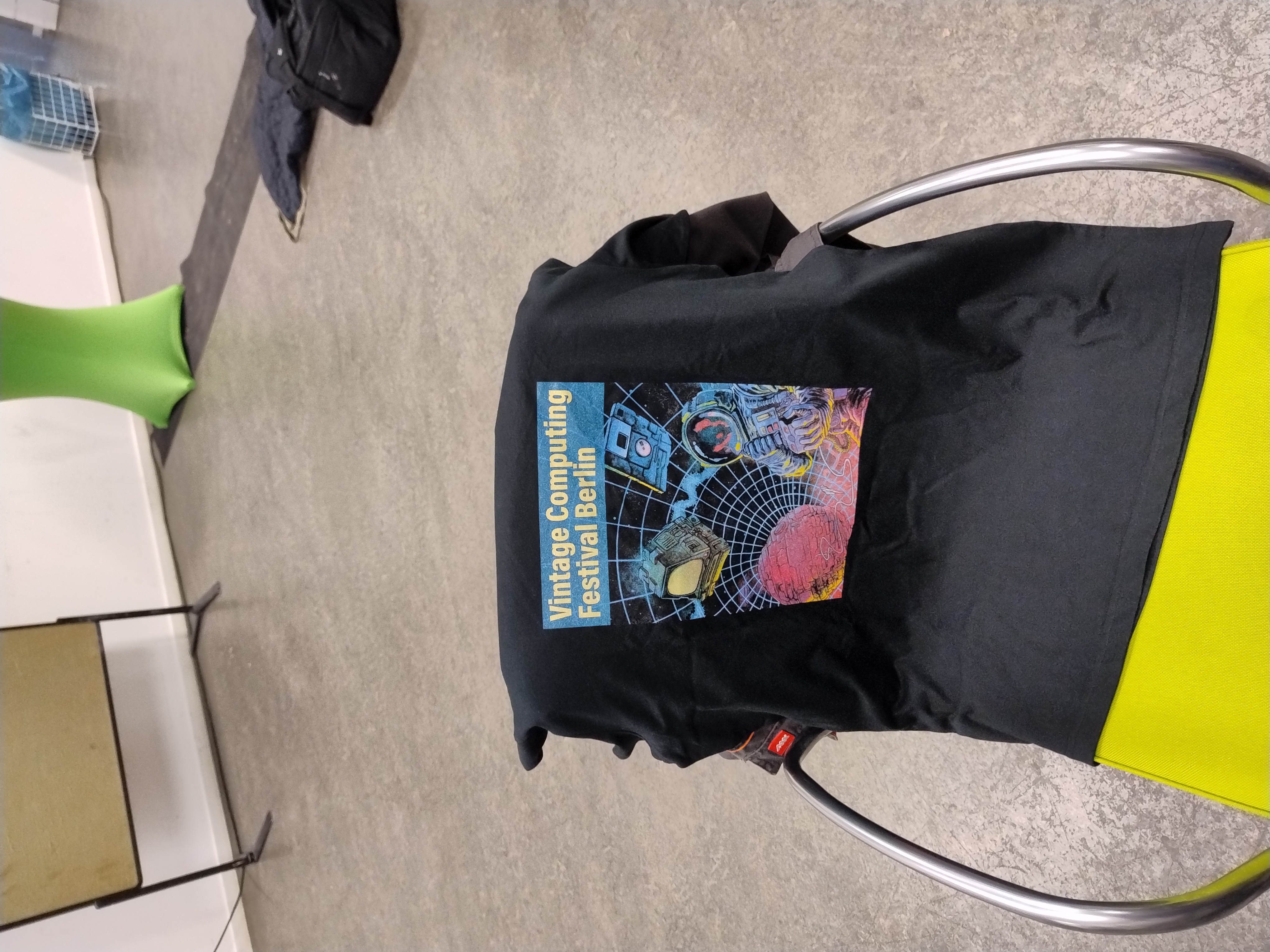
And, of course, some music
2026 can confidently be called the year of one particular band.
Two crazy aliens somehow found themselves on our planet. They're spotted, they fool around, they play strange rhythms, they need a translator to communicate with humans, and tickets to their concerts sell out within minutes.
Of course, I'm talking about Angine de Poitrine.
By some miracle, I managed to get to one of their performances.
What's even more remarkable is that, by some inexplicable magic, Rammstein guitarist Paul Landers happened to be there too.
What a coincidence!
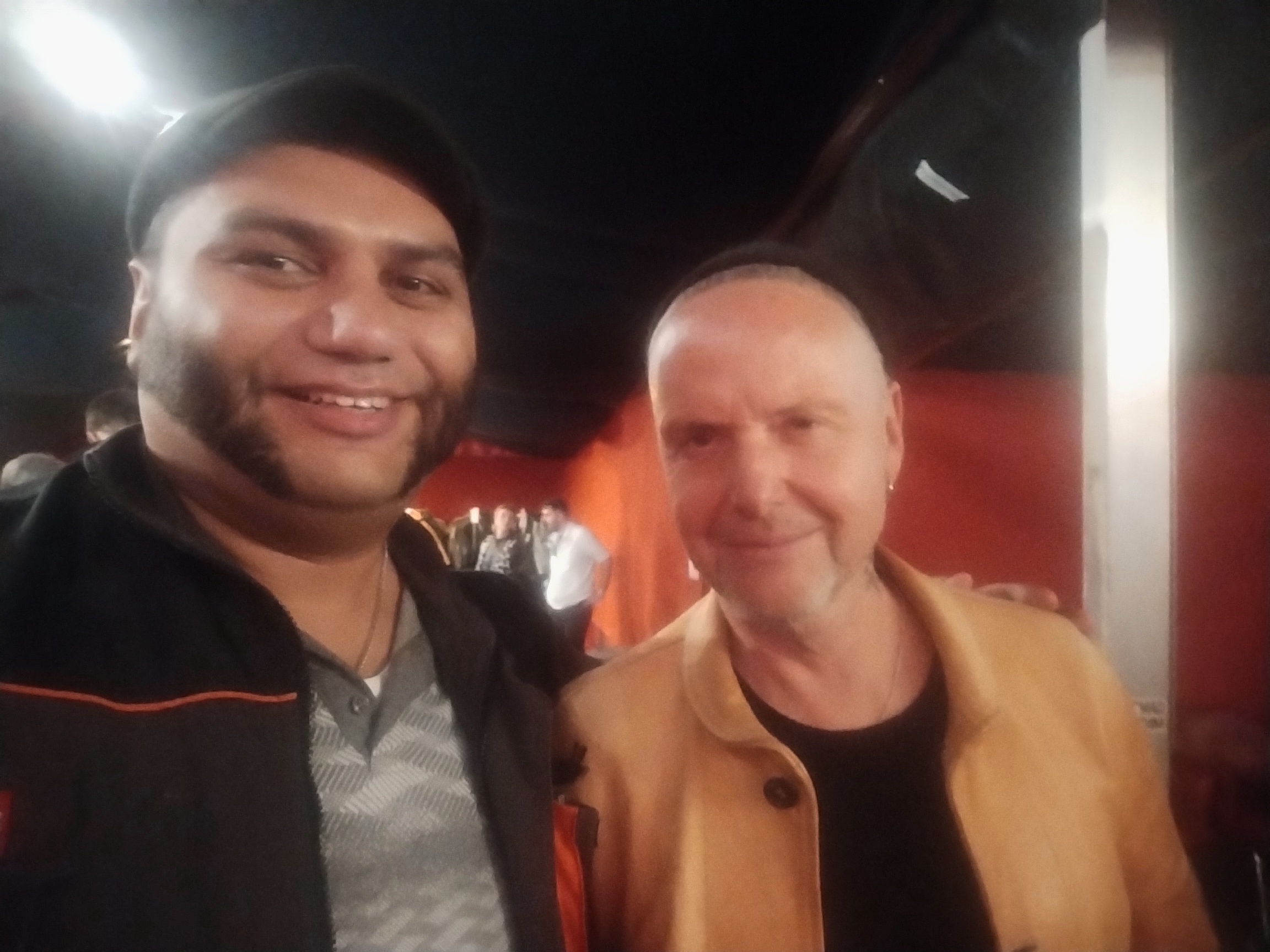
Tue, 3 Nov 2026 11:35:37 +0100
RSS // Telegram // Статистика